

What Is a Mass Tort Lawsuit and How Does It Work?
If you’ve been hurt by a defective product or medication that’s affected a bunch of other people too, you’ve probably heard terms like “mass tort” and “class action” getting tossed around. Most people use them like they mean the same thing. Even some attorneys do it. But there’s actually a pretty big difference, and it matters when you’re trying to figure out what kind of compensation you might be looking at.
So mass torts. Basically what happens is a drug or medical device or product injures a whole bunch of people, but not everyone gets hurt the same way. Maybe one person has some complications that clear up with treatment. Another person needs surgery. Somebody else ends up with permanent problems that mess with their ability to work or live normally. You get the idea—same source of the problem, very different outcomes for different people.The important part is your case doesn’t get lumped in with everyone else’s when it comes to figuring out what you’re owed. Your medical bills matter. Your lost wages matter. What you’ve actually been through—that’s what drives your compensation.
So What Actually IS a Mass Tort?
Think about it like this: let’s say there’s a medication that causes heart problems. One person might need some extra monitoring and medication adjustments. Another person ends up needing surgery. Someone else might have permanent damage that affects their ability to work. Same drug caused all of it, but the impact on each person’s life? Completely different.
That’s where mass torts come in. The cases get grouped together for some of the legal legwork (because who wants to reinvent the wheel 500 times, right?), but when it comes down to compensation, you’re not just getting some generic payout. Your case stands on its own.
What that means for you:
- Your injuries get evaluated separately from everyone else’s
- Your medical expenses are YOUR medical expenses
- Lost work time, future care needs, pain and suffering—all based on what YOU went through
- The settlement or verdict reflects your actual damages
This is probably the biggest advantage of a mass tort over a class action, which we’ll get to in a second.
Mass Tort vs Class Action—What’s the Deal?
Okay, so class actions treat everyone like they’re one big group. There’s usually one person or a handful of people representing everybody else. When it settles, everyone gets the same thing. You know those checks you sometimes get in the mail for like $8.50 from some lawsuit you didn’t even know you were part of? That’s a class action. Quick, efficient, but everyone gets the same modest amount regardless of their situation.
Mass torts work differently. Just because the same thing hurt a bunch of people doesn’t mean everyone got hurt the same way. Each person keeps their own case. The compensation varies—sometimes dramatically—based on what actually happened to you.
Real example: remember those checks people got from class action settlements about data breaches or overpriced products? Everyone got the same $20 or whatever. Now imagine if that same company’s product actually injured you badly enough that you needed surgery and couldn’t work for months. A mass tort approach looks at YOUR situation specifically and fights for compensation that actually makes sense for what you lost.
So which one is your case? That’s where a good attorney comes in. It depends on the specifics. Some firms handle both, and they’ll tell you which route makes more sense.
How Does This Whole Thing Actually Work?
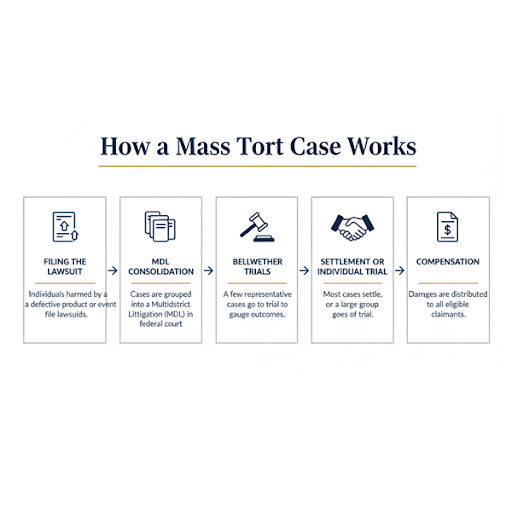
The process isn’t as scary as it sounds, though it does take time. Here’s roughly what happens:
Filing Your Claim
So you start by connecting with a Mass tort attorney and getting your lawsuit filed. They’ll need documentation—all your medical records, hospital bills, documentation of time off work. Basically anything that shows what happened and how it’s affected you. Yeah, there are other people filing similar lawsuits, but yours stands alone based on what you’ve been through.
The Grouping Phase
Courts will consolidate cases into what’s called multidistrict litigation, or MDL. Sounds more complicated than it is. Basically all the pretrial stuff—collecting evidence, interviewing witnesses, bringing in expert testimony—happens collectively. Makes sense when you think about it. Why have 500 different legal teams gather the same evidence 500 different times? But your case itself stays separate.
Bellwether Trials
The court picks some cases to try first. Call them test cases or bellwether trials. These give everyone a sense of how juries respond to the evidence. Maybe the verdicts push the defendant toward offering better settlements. Maybe they show plaintiffs their case isn’t as strong as they thought. Either way, they’re useful data points.
Settlement Negotiations or Going to Trial
Most of these end up settling. Companies would rather avoid the publicity of a drawn-out trial, and frankly, most plaintiffs would rather get compensated sooner than later. But here’s the difference from class actions—your settlement gets negotiated around your specific damages. Not some formula applied to everyone.
If settlement talks break down? Your attorney can still take your case to trial.
Getting Paid
Eventually you get your settlement or verdict. How much depends on what actually happened to you. Worse injuries generally mean more compensation. Minor injuries mean less. Pretty straightforward.
What Kind of Cases Become Mass Torts?
Most mass tort lawsuits fall into a few categories:
Dangerous Drugs
Pharmaceutical companies are supposed to test their products thoroughly and warn people about risks. But sometimes they rush dangerous drugs to market, hide side effects, or downplay dangers. When people get hurt by—heart attacks, strokes, organ damage, whatever—mass tort lawsuits hold them accountable. We’ve seen this with blood thinners, diabetes medications, pain relievers, you name it.


Defective Medical Devices
Hip replacements that break down way too soon. Surgical mesh that causes infections or worse. IUDs that migrate. Hernia mesh that fails. When medical devices don’t work as advertised or actively harm people, mass torts help victims get compensation for the damage.
Toxic Exposure
Chemical spills, contaminated water (we’ve all heard about those stories), workplace exposure to dangerous substances. When corporations cut corners and people or entire communities pay the price health-wise, mass torts provide a path forward.


Defective Products
Consumer products that turn out to be dangerous—exploding batteries, contaminated food, dangerous car parts, faulty children’s products. Design flaws, manufacturing defects, inadequate warnings. If it hurt a lot of people, there’s probably a mass tort for it.
Why You Actually Need an Attorney for This
Look, these cases are complicated. You’re going up against corporations with basically unlimited money and legal teams whose entire job is to minimize what they have to pay out. Trying to handle this yourself is like showing up to a gunfight with a butter knife.
An experienced mass tort attorney brings:
The resources to fight back: Mass tort cases need investigators, expert witnesses, scientific analysis. That stuff is expensive, and individual victims can’t afford it. Law firms handling mass torts have those resources ready to go.
Experience with how these play out: They’ve seen the tactics companies use. They know what evidence you need. They understand how to maximize your compensation because they’ve done it before.
No money upfront: Most work on contingency, meaning they don’t get paid unless you win. That levels the playing field right there.
Attention to YOUR case: Yeah, you’re part of a bigger litigation, but your attorney is focused on your specific injuries and losses. Building the strongest possible individual claim for you.
Negotiating power: When a bunch of injured people are represented by skilled attorneys, it sends a message. Companies tend to take settlements more seriously.
Am I Even Eligible?
Maybe. Key things that matter:
- You got hurt or sick from something that’s hurt other people too
- You can prove it (medical records, receipts, documentation)
- The statute of limitations hasn’t run out (this varies by state—don’t wait around)
- Your injuries are significant enough that they need individual evaluation
The only way to know for sure is to talk to an attorney who can look at your specific situation. Most offer free consultations, so there’s no risk in finding out.
Bottom Line
Nobody plans on ending up in a mass tort lawsuit. These things happen when we trust that products are safe, medications are tested properly, companies aren’t cutting corners. Then that trust gets broken in a really painful way.
Mass torts give regular people a way to stand up to powerful corporations and actually have a shot at justice. Unlike class actions where everyone gets the same modest payout, mass torts recognize that serious injuries deserve serious compensation.
If you think you’ve been harmed by something that’s hurt a bunch of other people, don’t wait. Statutes of limitations are real. Evidence can disappear. Witnesses forget things. The longer you wait, the harder your case becomes.
Talk to an attorney. Most consultations are free. Figure out if you have a case. Understand your options. You don’t have to do this alone, and you definitely don’t have to accept less than you deserve.
Need Help? Here, Have A Lawyer.
You’ve Been Wronged. We’ll Make It Right.
[Schedule your free case evaluation]
Get in touch for a free consultation. No obligation, no pressure. Let’s talk about what happened and figure out if you have a case worth pursuing.
Disclaimer: This is informational only, not legal advice. Every case is different. Talk to a qualified attorney about your specific situation. Statutes of limitations vary—don’t wait too long to protect your rights.

Get In Touch
Need help? Here, Have A Lawyer.
Connect with usNeed help? Here, Have A Lawyer.
You’ve Been Wronged. We’ll Help Make It Right.
Download your free how-to guide for Havealawyer.com