

Rideshare Driver Lawsuit: What Drivers Need to Know About Their Legal Rights & Compensation

Driving for Uber or Lyft seems straightforward, right? Download the app, turn it on when you want to work, pick up passengers, make money. It’s flexible, accessible, and for millions of people, it’s become a primary or supplemental income source.
But behind that simple app interface lies a complicated legal reality that many drivers don’t fully understand until something goes wrong. And when things do go wrong—whether it’s an accident, a deactivation, unpaid wages, or discriminatory treatment—drivers often discover they have fewer protections than they thought.
Let’s break down what rideshare drivers actually need to know about their legal rights and what
recourse they have when those rights are violated.
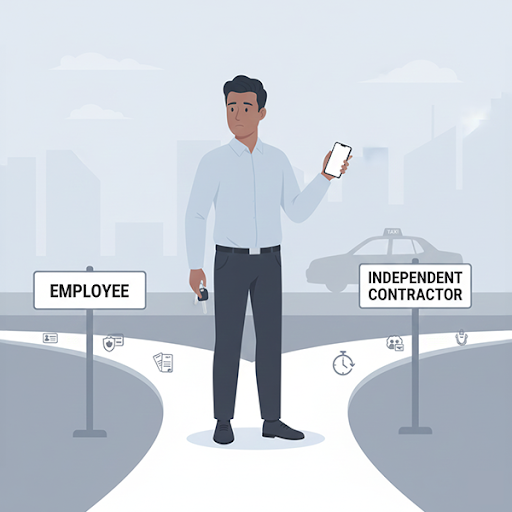
The Classification Problem: Employee vs. Independent Contractor
This is the big one. The foundation of almost every legal issue rideshare drivers face comes down to how they’re classified.
Uber, Lyft, and other rideshare companies classify drivers as independent contractors, not employees. On the surface, this seems fine. You set your own hours, use your own car, decide when and where to work. That’s contractor stuff, right?
But here’s the catch: independent contractors don’t get the same protections and benefits as employees. No minimum wage guarantees. No overtime pay. No workers’ compensation if you’re injured on the job. No unemployment benefits when work dries up. No employer-provided health insurance. No paid sick leave.
Meanwhile, the rideshare companies maintain significant control over drivers. They set the rates, determine which rides you get, establish service standards, monitor your acceptance rates, and can deactivate you at will. That level of control starts to look a lot more like an employer-employee relationship.
This classification issue has sparked lawsuits across the country. Some argue drivers should be classified as employees and entitled to all the benefits that come with it. Others maintain the current independent contractor model is appropriate but that drivers deserve better protections regardless.
In California, this fight led to Proposition 22, a ballot measure that kept drivers as independent contractors but provided some limited benefits. The legal battles continue, and the outcome will shape rideshare driver rights for years to come.
Common Legal Issues Facing Rideshare Drivers
Let’s look at the specific problems that can give rise to legal claims:
Wage and Hour Violations
Even as independent contractors, you’re entitled to fair compensation for your work. But many drivers claim they’re not getting it.
Issues include:
- Deductions for fees that reduce effective pay below minimum wage
- Unpaid time waiting for rides or dealing with app issues
- Discrepancies between what passengers are charged and what drivers receive
- Hidden fees that aren’t clearly disclosed
- Changes to payment structures that effectively cut pay

Some of these issues have led to class action lawsuits. Drivers have successfully argued that after expenses like gas, maintenance, insurance, and the company’s cut, they’re making less than minimum wage—which might violate labor laws even for contractors.
Wrongful Deactivation
Here’s a nightmare scenario: you log into the app one day and discover you’ve been deactivated. No warning. No explanation. No appeal process. Just… gone. And with it, your income.
Rideshare companies can deactivate drivers for all sorts of reasons—low ratings, too many declined rides, customer complaints, alleged policy violations, or sometimes no clear reason at all. The process is often opaque and automated.
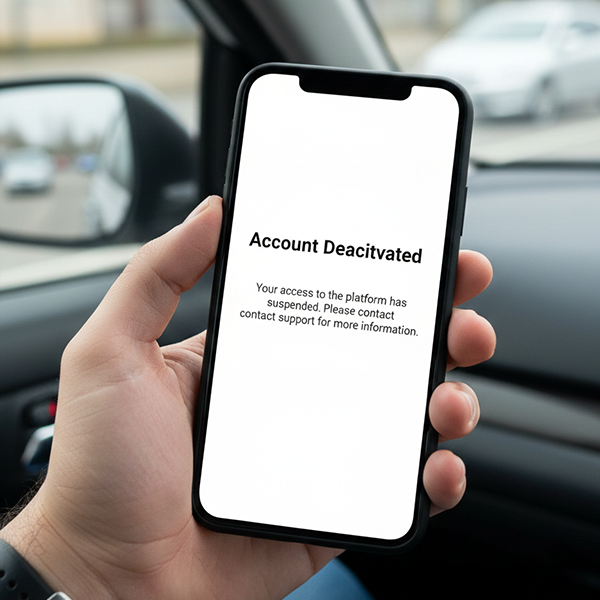
Drivers have sued over wrongful deactivation, arguing:
- The deactivation was based on false allegations
- They weren’t given due process or a fair appeal
- The standards for deactivation are applied inconsistently or discriminatorily
- Deactivation violated the terms of their agreement with the company
These cases can be tough because the independent contractor agreement usually gives the company broad discretion to deactivate drivers. But there are limits, especially when discrimination or retaliation is involved.
Discrimination and Harassment
Civil rights laws protect independent contractors from discrimination just like employees. If you’re deactivated, denied opportunities, or treated differently because of your race, gender, age, disability, religion, or other protected characteristic, that’s potentially illegal.
Examples might include:
- Being deactivated based on passenger complaints that contain racial slurs or bias
- Being denied access to certain ride types or areas based on protected characteristics
- Experiencing harassment from passengers with no recourse or protection from the company
- Retaliation for reporting discrimination or safety concerns
These claims can be filed with the EEOC or pursued through civil lawsuits.

Accidents and Injuries
When you’re injured while driving for a rideshare company, things get complicated fast. Who’s responsible? Whose insurance covers what? Can you sue?
The answers depend on what you were doing when the injury occurred:
Offline or en route to your first ride: Generally your personal auto insurance applies. Rideshare companies provide little to no coverage.
Logged in but no ride request accepted: Rideshare companies typically provide limited liability coverage but no comprehensive or collision coverage for your vehicle.

En route to pick up a passenger or during a trip: The rideshare company’s commercial insurance should cover you, typically up to $1 million in liability.
But getting those benefits isn’t always straightforward. Insurance companies might deny claims,dispute coverage, or drag out the process.
If you’re injured by another driver’s negligence, you’d typically sue that driver. But if your injuries occurred because of a dangerous passenger, app malfunction, or the rideshare company’s negligence, you might have a claim against the company itself—though their terms of service usually include forced arbitration clauses.
Expense Reimbursement
As an independent contractor, you’re responsible for vehicle maintenance, gas, insurance, phone bills, and all other business expenses. But California and some other jurisdictions require that companies reimburse contractors for necessary business expenses if failing to do so would effectively drop their pay below minimum wage.
Some drivers have filed lawsuits arguing that after accounting for unreimbursed expenses, their ef‐fective pay violates wage laws. The success of these claims varies by jurisdiction and specific circumstances.
The Forced Arbitration Problem
Here’s something buried in that user agreement you clicked through when signing up: you probably agreed to resolve any disputes through arbitration rather than court.
Arbitration is a private process where a neutral arbitrator (rather than a judge or jury) decides your case. Companies prefer it because it’s faster, cheaper, and keeps disputes out of the public eye. But critics argue it favors companies over individual workers and lacks the transparency of public court proceedings.
Forced arbitration clauses also typically include class action waivers, meaning you can’t join with other drivers in a class action lawsuit. You have to pursue your claim individually, which can be prohibitively expensive and time-consuming for smaller claims.
Some courts have struck down forced arbitration agreements in certain contexts, and the law continues to evolve. But as of now, many rideshare drivers are bound by these provisions, limiting their legal options.

Collective Action and Class Lawsuits
Despite arbitration clauses, some drivers have successfully banded together in class action lawsuits or at least tried to.

Notable cases include:
- Misclassification lawsuits: Drivers arguing they should be classified as employees and seeking back wages, benefits, and expense reimbursement.
- Tip theft claims: Allegations that companies misled passengers about tips or failed to pass along the full amount.
- Background check lawsuits: Claims that inaccurate background checks led to wrongful deactivations.
Accessibility lawsuits: Allegations that rideshare companies discriminate against drivers or passengers with disabilities.
Some of these cases have resulted in multi-million-dollar settlements. Others are still working their way through the courts.If you think you have a claim that might affect many drivers, consulting with a mass tort attorney about class action possibilities is worth considering.
Your Rights and How to Protect Them
So what can you actually do as a rideshare driver to protect yourself?
Document everything. Keep records of:
- Your hours and earnings
- All trips and mileage
- Vehicle expenses (maintenance, gas, insurance, depreciation)
- Communications with the rideshare company
- Any incidents, complaints, or issues that arise
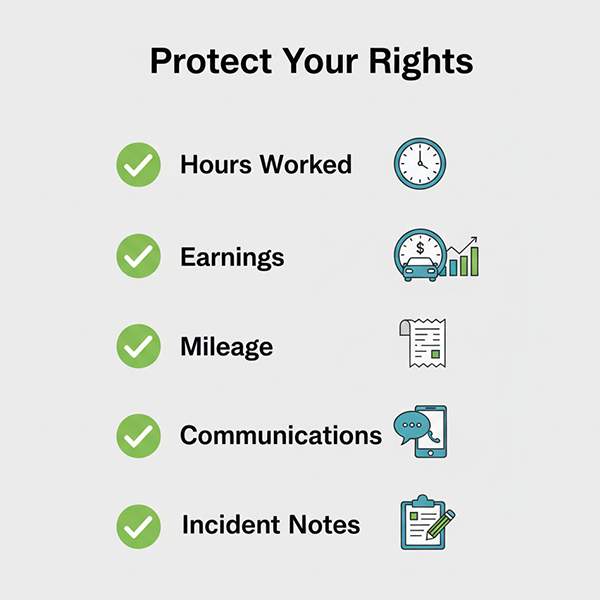
Good records are essential if you ever need to pursue a legal claim.
Understand your agreement: Yes, the terms of service are long and boring. But you need to know what you agreed to—including arbitration clauses, deactivation policies, and payment terms.
Know your insurance coverage: Make sure you understand what your personal auto insurance covers and what the rideshare company’s insurance covers. Consider rideshare-specific insurance if gaps exist.
Report issues promptly: If you experience discrimination, harassment, safety concerns, or pay discrepancies, report them through proper channels and keep records of your complaints.
Join driver advocacy groups: Organizations like Rideshare Drivers United and others fight for driver rights and can provide resources and support.
Consult with an attorney if needed: If you’ve been wrongfully deactivated, seriously injured, or systematically underpaid, talking to a lawyer who handles rideshare driver cases can help you understand your options.
The Future of Rideshare Driver Rights
The legal landscape for rideshare drivers is evolving rapidly. Legislation at state and federal levels continues to address classification, wages, and protections. Court cases are setting new precedents. And public awareness of driver issues is growing.
Some changes on the horizon might include:
- Clearer classification standards or a hybrid category between employee and contractor
- Portable benefits systems that provide protections regardless of classification
- Stronger due process requirements for deactivations
- Better transparency around pay, fees, and algorithms
- Enhanced protections for injured drivers
But change takes time, and in the meantime, drivers need to understand the rights they currently have and how to enforce them.
When to Consider Legal Action
How do you know if your situation warrants talking to a lawyer?
Consider it if:
- You believe you’ve been wrongfully deactivated, especially due to discrimination or false allegations
- You’ve been seriously injured while driving and insurance claims are being denied or delayed
- You believe you’re being systematically underpaid or charged excessive fees
- You’ve experienced discrimination or harassment with no adequate response from the company
- You’ve identified a pattern of problems affecting many drivers that might support a class action
Many attorneys offer free consultations, especially for potential class actions or cases with significant damages. There’s no harm in exploring your options.
The Bottom Line
Driving for a rideshare company shouldn’t mean giving up your legal rights. You deserve fair pay, safe working conditions, protection from discrimination, and due process when problems arise.
The independent contractor classification complicates things, and forced arbitration clauses limit options. But drivers aren’t powerless. Legal remedies exist, and successful lawsuits have already resulted in changes to company policies and compensation for drivers.
If you’re experiencing issues that seem unfair or illegal, don’t just accept it as the cost of doing business. Document what’s happening, understand your rights, and consider speaking with a qualified attorney.
The gig economy is still figuring itself out legally. Your voice—and your willingness to stand up for your rights—contributes to how rideshare driver protections evolve going forward.
You’re not just a driver. You’re a worker with rights, and those rights matter.

Get In Touch
Need help? Here, Have A Lawyer.
Connect with usNeed help? Here, Have A Lawyer.
You’ve Been Wronged. We’ll Help Make It Right.
Download your free how-to guide for Havealawyer.com