
What Is AFFF and Why Are Firefighters Filing Lawsuits?

Last updated on February 17, 2026

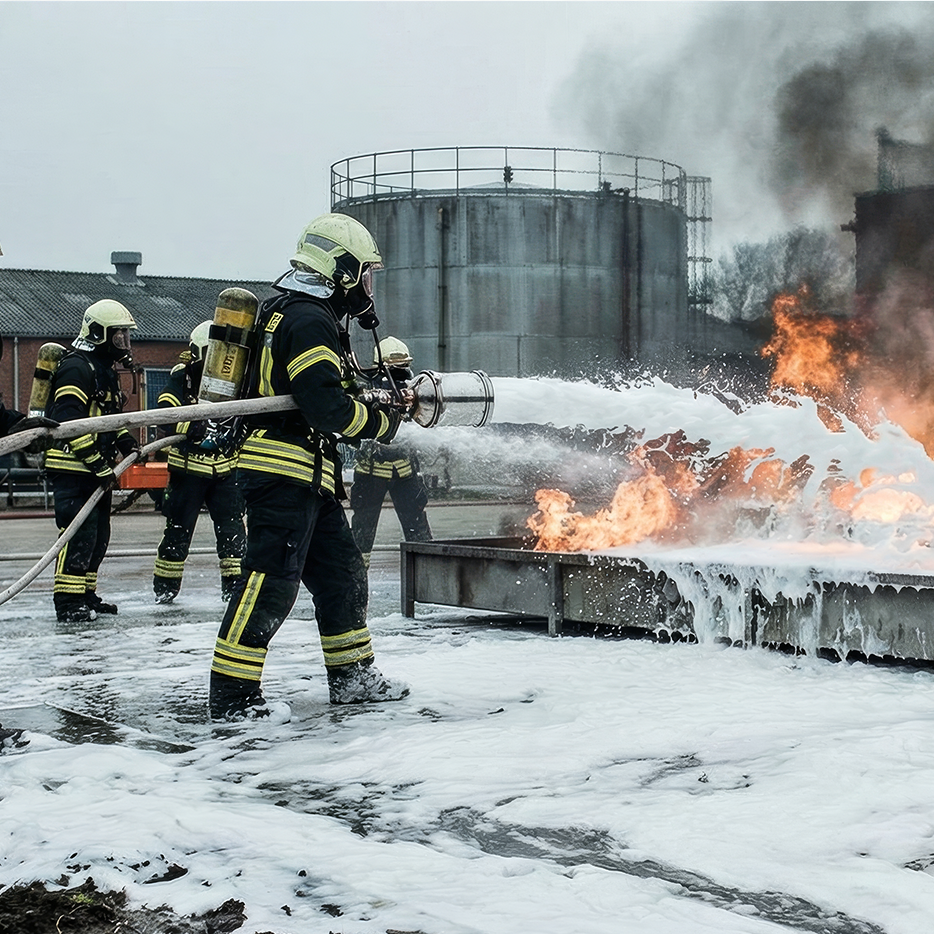
Aqueous Film-Forming Foam (AFFF) is a type of fire retardant used to suppress fires instigated by liquid and fuel-based fires, such as those involving petroleum and jet fuel. Firefighters working on the frontline have been using this fire suppressant for decades, most of them unaware of the toxic ‘forever chemicals’ that it contains. The AFFF works by forming a barrier layer between the fire and the oxygen present in the air, preventing the fire from staying ignited. AFFF is largely used in military facilities, shore areas, and industrial spaces, and it has been causing serious health risks to the users, including kidney and testicular cancer.

AFFF Lawsuit

AFFF Lawsuit

The harmful effects of AFFF


The use of AFFF began in 1960 by the U.S. Navy, which was then followed by the Department of Defense
using it for all military installations. Facilities like airports and shipping ports further started acquiring AFFF, and it has continued to the present date. AFFF is highly toxic, as
it contains between 50% and 98% PFAS, a group of over 9,000 toxic chemicals , and both concentrations carry extreme risks for those exposed.


AFFF contains per- and polyfluoroalkyl substances, which have a strong and stable chemical structure that doesn’t allow them to break down easily, proving extremely harmful to the human body as it causes bioaccumulation. This is what gives them the name ‘forever chemicals’.

Understanding AFFF Lawsuit

Firefighting officials who have worked closely with AFFF have had to face serious health risks. The health risks exposed to are not minor, leading to cancers of different kinds. Anyone who has worked with AFFF firefighting foam and has developed a related illness is eligible to file the AFFF lawsuit
The firefighter foam lawsuit targets the manufacturers of firefighting foam, who not only showed utmost negligence by producing such equipment, but also by failing to notify of its detrimental effects, putting severe human lives at risk.

AFFF lawsuits can be declared as mass tort cases because here, a number of victims come together who have had similar experiences and damages to file claims against the manufacturing companies. Each case is judged separately; however, the plaintiff gains an additional edge over shared evidence, expert testimonies, and other legal resources. To file this case and navigate through the entire process, mass tort attorneys can be of great help.

Who Can File an AFFF Lawsuit?

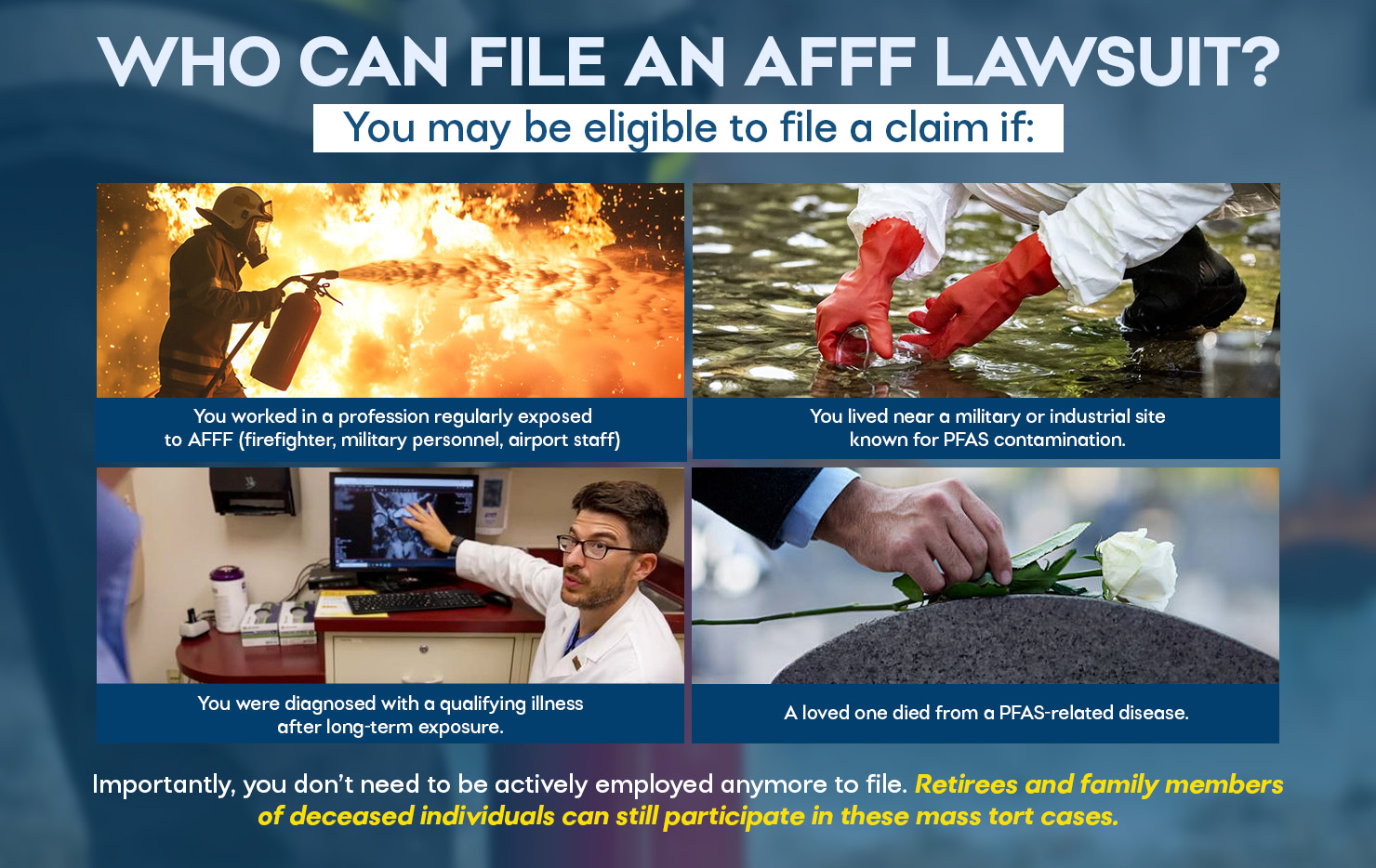
  • You may be eligible to file a claim if:
  • You worked in a profession regularly exposed to AFFF (firefighter, military personnel, airport staff).
  • You lived near a military or industrial site known for PFAS contamination.
  • You were diagnosed with a qualifying illness after long-term exposure.
  • A loved one died from a PFAS-related disease.
AFFF Lawsuit

Importantly, you don’t need to be actively employed anymore to file. Retirees and family members of deceased individuals can still participate in these mass tort cases.

Why Timely Action Matters

The firefighting officials who have been affected by PFAS-related illnesses cannot show delay, as it will hamper their chances of getting the rightful compensation. Even if you’re uncertain about your eligibility, speak to a mass tort attorney about your case. This will not only solve your queries and confusion but also smooth out the entire process, levelling up your chances of getting a fair settlement.
AFFF Lawsuit

Type of Compensation a Firefighter is Entitled to:

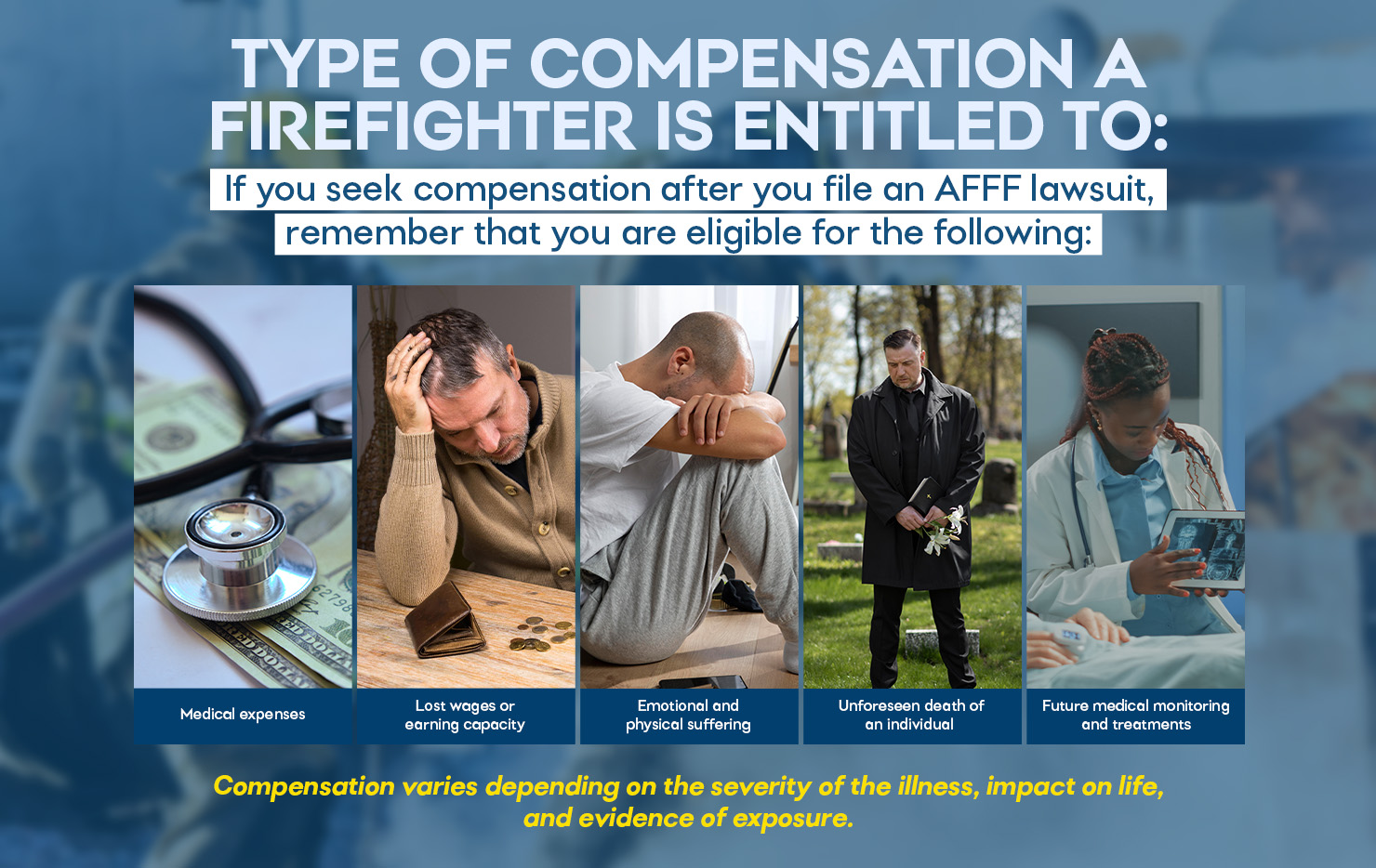
If you seek compensation after you file an AFFF lawsuit, remember that you are eligible for the following:

  • Medical expenses
  • Lost wages or earning capacity
  • Emotional and physical suffering
  • Unforeseen death of an individual
  • Future medical monitoring and treatments

Compensation varies depending on the severity of the illness, impact on life, and evidence of exposure.

Why is Taking Legal Action Important?

The intention behind the AFFF lawsuit is not simply about extracting compensation fees from the manufacturing companies; it is more about fighting a legal battle and holding the manufacturers accountable for their highly irresponsible behaviour. This will demand responsibility from the big corporations and also regulate the manufacturing and circulation of toxic substances in the market, ensuring safety at every stage. 

If you or anyone you know suffered from the list of illnesses caused due to PFAS, this is your chance to come front and take up the case with a mass tort attorney. They would then evaluate the case, gather the relevant evidence, and navigate the case, ensuring your well-deserved justice. 

Conclusion

The AFFF lawsuit has not only helped the firefighting officials seek justice, but it has brought limelight to some of the significant topics, like occupational and environmental hazards in industrial and military facilities. There’s no need for our protectors to put their lives at risk. 

The firefighter foam lawsuit will encourage every professional community, including firefighters, to fight for their rights and expose the toxic legacy of PFAS contamination. Their fight represents a crucial step toward corporate responsibility, environmental protection, and a safer future for all.


What Is a Class Action Lawsuit? Definition, Examples & How It Works

Last updated on February 17, 2026

Imagine a classroom with a sturdy bully, who, daily, bullies different kids in his classroom. Now, if one out of the 20 kids goes to the class teacher and reports the bully, it wouldn’t effectively make a difference in the bully’s behaviour compared to the 20 kids going as a group and reporting their hurtful experiences to the teacher. Now, let us consider this scenario at a grander level.

Consider a product or a service that has been causing similar harm to a large group of people. And there is no sense of accountability shown by the company. Now, if a single person sets forth to lead a legal battle against such large organizations, it can get ugly, and in the end, it might turn futile. However, on the other hand, a hefty number of people coming together and fighting in unison for the same injustice experienced might surely achieve the desired outcome. This phenomenon of plaintiffs coming together and fighting a singular case is known as a class action lawsuit.

These class action lawsuits can be navigated with ease if they’re handed over to experienced and skilled class action law firms and mass tort attorneys. Along with the simplification of the entire legal process, these lawsuits also exacerbate the gravity of the case and give the plaintiffs a stronger representation.

Understanding Class Action Lawsuits

As discussed above, a class action lawsuit refers to a legal action taken by a group of people who have had to suffered from a similar kind of experience at the hands of a company’s negligence. The collective group of plaintiffs is known as ‘class’. For such type of cases, there are specific class action lawsuit firms working religiously to help out the plaintiffs.

Hundreds and thousands of individual legal complaints might get lost in oblivion. But when all of these individual lawsuits get consolidated into a single claim, it receives the deserved attention and representation in the legal terrain. Moreover, it helps the plaintiffs to save their time, cost, and makes use of the collective resources.

The cause of the class action lawsuit:

  • Defective and harmful products
  • Corporate deception and false advertising
  • Environmental abuse
  • Wage or employment violation
  • Breaching of data privacy
  • Injuries arising from medical devices or pharmaceutical products

Class Action Lawsuit

How Does This Work?

Now, there are certain steps that need to be followed before one takes the course of a class action lawsuit. These are the steps an experienced class action lawsuit attorney should follow:

1. Investigation

Research survey and investigating operations carried out by class action law firms to understand the pattern of similarity shared by all the affected people.

2. Class Certification

Before the legal proceedings are carried out, it should verify through all of these pointers:

  • All the plaintiffs are sharing a common ground and factual issues.
  • Verifying the volume of the people who have come together to charge a claim
  • The ‘class representative’ of the group speaks for the entire group.
  • The class action lawsuit attorney is qualified enough to represent the whole group.

3. Notification to class members

Once the lawsuit is certified, the plaintiffs involved are notified through the medium of an email, physical mail, or public announcements. They are given the option to continue with the class action lawsuit or proceed with their individual claim.

4. Discovery and Negotiations

Often, both parties, that is, the plaintiffs and the defendants, exchange testimonies, evidence, and documents. There are times when class action lawsuits are tackled out of court, where the defendant party agrees to a settlement and the plaintiffs receive their compensation.

5. Settlements or Trials

When the case reaches the stage of settlement, it must be ensured that each member of the group receives a fair share of the compensation. In instances where the case does not settle, it then goes to trial.

The compensation fee also pays the class action lawsuit attorney, which is called a contingency fee.

Examples of Class Action Lawsuits

Let’s study some of the important class action lawsuits and understand how class action law firms fought on behalf of the class members.

AFFF Lawsuit

1. AFFF Lawsuit (Firefighting Foam Cases)

The AFFF lawsuit includes numerous firefighters, military members, and airport employees exposed to harmful substances known as PFAS, frequently referred to as “forever chemicals.” Chemicals present in firefighting foam have been associated with cancer and various severe health issues.

Mass tort attorneys represent victims residing in the U.S. and deliver them compensation fees for the medical costs they have had to endure, their lost wages, and the treatment costs of consequent health effects they have suffered from.


2. Rideshare Assault Lawsuits

In the recent past, lawsuits have been filed against prominent rideshare companies, Uber and Lyft, as passengers, predominantly women, have reported assault and service negligence.

Class action firms are suing these companies for failing to do adequate background checks, ignoring safety complaints, and not taking reasonable steps to protect the passengers.

Rideshare Assault Lawsuits

Depo-Provera Lawsuit

3. Depo-Provera Lawsuit

The Depo-Provera lawsuit concerns women who’ve used the long-term contraceptive shot and suffered bone loss, hormonal changes, or had breast cancer as a result.

Contentions made by the plaintiffs are that the manufacturer failed to warn of the risks associated with prolonged use. This case has caught the attention of mass tort and pharmaceutical litigation lawyers, looking to hold pharmaceutical companies accountable for the safety litigation gaps.


4. SSDI Backpay Lawsuits

Some SSDI applicants face delays, over-payments, and in some cases, denials of benefits due to administrative errors. Due to systemic issues that disproportionately and unfairly affect a large number of applicants, some class action lawsuits have been filed against the government.

These lawsuits aim to secure proper and fair compensation and reform processes that cause ongoing harm to claimants with disabilities.

SSDI Backpay Lawsuits

Conclusion

A class action lawsuit represents more than merely a joint legal procedure; it serves as a tool for accountability. It empowers people to confront corporations, organizations, or institutions that have inflicted widespread damage.

Whether it’s hazardous firefighting foam, dangerous rideshare methods, or faulty medical devices, these instances highlight that justice is more powerful when sought collectively.

If you think you’ve been impacted by corporate carelessness or dangerous products, take action now.