Mass Tort Law: 4 Common Causes of Mass Tort Lawsuits

Last updated on February 17, 2026

Mass tort lawsuits make headlines. We see news stories about thousands of people suing pharmaceutical companies, medical device manufacturers, or corporations over widespread harm. But what actu‐ ally triggers these massive legal actions? What kinds of wrongdoing lead to situations where hundreds or thousands of people end up with similar injuries? 

Let’s look at the four most common causes of mass tort lawsuits and what makes each one unique.


Mass Tort Lawsuits

1. Dangerous Pharmaceutical Drugs

If there’s one category that dominates mass tort litigation, it’s defective or dangerous drugs. And honestly? It makes sense when you think about how many people take prescription medications every single day. 

Here’s how it typically happens: a pharmaceutical company develops a drug, runs clinical trials, gets FDA approval, and starts selling it to millions of people. Everything seems fine at first. Maybe the drug works well for what it’s supposed to do. But then patterns start emerging.

People taking the drug develop heart problems. Or liver damage. Or cancer. Or birth defects. Or any number of serious, sometimes fatal, side effects that weren’t adequately disclosed or tested for. 

Sometimes the pharmaceutical company knew about these risks but downplayed them to protect profits. Other times, they didn’t conduct adequate testing before bringing the drug to market. Either way, people get hurt, and mass tort lawsuits follow. 

Take a few real-world examples. Vioxx, a pain medication, was pulled from the market after being linked to heart attacks and strokes. Thousands of lawsuits followed. Risperdal, an antipsychotic medication, was found to cause serious hormonal problems in young boys. Another wave of litigation. Zantac, the popular heartburn medication, faced mass tort claims over concerns that it could break down into a cancer-causing substance.

The common thread? Companies put profit over safety, and consumers paid the price. 

These cases often involve allegations of: 

  • Failure to adequately test drugs before release 
  • Hiding known side effects from regulators and consumers 
  • Downplaying risks in marketing materials 
  • Continuing to sell dangerous drugs even after problems emerge 
  • Failing to provide proper warnings to doctors and patients 

The scary part is that by the time these problems come to light, the damage is already done. People trusted their doctors and the medications they were prescribed. They assumed the FDA approval meant the drugs were safe. And then they ended up with serious, sometimes irreversible health prob‐ lems.


2. Defective Medical Devices

Medical devices are supposed to improve our health or quality of life. Hip replacements help people walk without pain. Pacemakers regulate heartbeats. Hernia mesh repairs weak tissue. IVC filters prevent blood clots from reaching the lungs. 

But what happens when these devices don’t work as intended? Or worse, what if they actively harm the people who rely on them? 

Mass Tort Lawsuits

Medical device mass torts have exploded over the past couple of decades. Unlike drugs, many medical devices don’t go through the same rigorous FDA approval process. Some get to market through a “fast-track” pathway that requires less testing. That’s great for getting innovative treatments to patients quickly, but it also means potentially dangerous devices can slip through with inadequate safety data.

Consider some prominent examples: 

Hernia mesh – Multiple brands have faced thousands of lawsuits from patients experiencing chronic pain, infections, mesh migration, and organ perforation. The mesh that was supposed to fix their hernias became a source of ongoing suffering.

Hip replacements – Metal-on-metal hip implants, particularly certain DePuy and Stryker models, caused metallosis (metal poisoning) when the device components rubbed together and released toxic particles into patients’ bodies. 

Transvaginal mesh – These devices, used to treat pelvic organ prolapse and stress urinary incontin‐ ence in women, have been linked to serious complications including organ perforation, chronic pain, infections, and erosion through tissue. 

IVC filters – Designed to catch blood clots, some of these devices have broken apart inside patients’ bodies, with fragments traveling to the heart or lungs. 

The pattern is depressingly familiar. Rush to market, inadequate testing, hidden complications, patients suffering, and eventually mass litigation. 

What makes medical device cases particularly troubling is that many of these products are implanted in people’s bodies. Unlike a medication you can stop taking, a defective implant often requires additional surgery to remove—putting patients through more risk, more recovery time, and more expense.


Mass Tort Lawsuits

3. Environmental Contamination and Toxic Exposure

Sometimes mass tort lawsuits arise not from a product someone chose to use, but from environmental exposure they couldn’t avoid. 

These cases typically involve corporations polluting the environment in ways that harm communities. The contamination might be in the water supply, the air, the soil—anywhere people live, work, and go about their daily lives. 

The timeline on these cases can be particularly cruel. Environmental contamination often happens over years or decades before anyone realizes there’s a problem. By then, entire communities have been exposed, and serious health issues have already developed.
Let’s look at some notorious examples: 
Camp Lejeune water contamination – For decades, Marines and their families stationed at Camp Lejeune in North Carolina drank and bathed in water contaminated with toxic chemicals. The result? Elevated rates of cancer, birth defects, and other serious illnesses. It took years of advocacy before victims could pursue legal claims.
Dupont and PFAS (forever chemicals) – The company contaminated water supplies near its plants with PFAS chemicals used in Teflon production. These chemicals don’t break down in the environment or the human body, leading to long-term health consequences for exposed populations. 
Flint water crisis – When the city switched its water source to save money, lead from aging pipes leached into the drinking water, exposing thousands of residents—particularly children—to dangerous levels of lead. 
3M earplugs – While not traditional “environmental” exposure, this mass tort involved defective com‐ bat earplugs issued to military service members. Thousands of veterans suffered hearing loss or tinnitus because the earplugs didn’t provide adequate protection. 
Roundup weedkiller – Lawsuits allege that glyphosate, the active ingredient in Roundup, causes non-Hodgkin’s lymphoma. Landscapers, farmers, and home users who were regularly exposed have filed thousands of claims.
What makes environmental and toxic exposure cases unique is that the harm often affects entire com‐ munities. It’s not just individual consumers choosing to use a product—it’s everyone who happens to live in an area, work in a facility, or serve in a particular unit. 
These cases also tend to involve delayed diagnosis. Cancer and other diseases caused by toxic exposure can take years or decades to develop, making it harder to draw direct lines between the exposure and the illness.


4. Consumer Product Defects

One big group of mass tort cases targets common items folks handle every day – like toiletries, drugs, or household goods – that everyone takes for granted as safe and properly checked. If faith in those products cracks wide open, damage builds quickly across many lives, sometimes leading straight into courtrooms.

Over at HaveA Lawyer.com, they’ve grouped cases around products tied to major harm claims – things like addiction-linked injuries or serious health issues, including:

Mass Tort Lawsuits

Lawsuits explore if game designs push players too far, looking at signs like missed jobs, school slips, money drains, and emotional strain tied to excessive play.

Laws tied to Roblox often center on safety issues – some claim the design poses risks, while others point to harmful habits forming, especially among young users.

Often at the heart of lawsuits, talcum powder issues revolve around claims of dirty products and hidden risks tied to illness warnings.

Some hair relaxer labels suggest lasting harm from years of use, pointing to serious health issues tied to pregnancy and birth. Warnings given before purchase? Not always clear enough, users say.

What typically triggers consumer-product mass torts?

Even now, nearly every instance ties back to standard fault concepts – simply linked to novel types of goods:

A faulty idea at birth makes the product dangerous, regardless of perfect execution during build.

A slip-up happens – during making something wrong goes into the supply. Contamination shows up, or steps missed, putting safety at risk for entire batches or lines.

Missing warnings make things worse – proper guidance could help people use the product without greater harm, yet signs are absent or hard to find.

Misleading ads or fake safety promises – when labels or ads make something seem safer or more suitable than it really is.

What these cases mostly deal with is the main issue at stake

What usually drives consumer-product mass torts comes down to one thing – how much warning was there. Could dangers have been seen ahead of time? How did businesses handle safety checks? Once issues arose, did they move fast or slow, hide facts, stay silent, still push merchandise? If signs point to a company ignoring clear danger, even if unaware, legal claims might grow fast.

You can share the following section if you’d like – I’ll match its style exactly, helping everything flow together like part of one smooth section.


Mass Tort Lawsuits

The Common Thread

Looking across all four categories, what’s the common denominator in mass tort lawsuits? 

It’s not just that people got hurt. Accidents happen, and not every injury leads to litigation. The key factor is widespread harm caused by a common source—typically due to negligence, inadequate testing, hidden dangers, or prioritizing profit over safety. 

Mass tort lawsuits represent the legal system’s way of holding powerful entities accountable when their actions or products harm large numbers of people. They serve several purposes: – Compensating victims for their injuries and losses

  • Deterring future corporate misconduct 
  • Forcing dangerous products off the market 
  • Bringing transparency to hidden dangers 
  • Funding additional research into the harms caused 

These cases also raise important questions about corporate responsibility, regulatory oversight, and consumer protection. Should pharmaceutical companies be allowed to fast-track drugs with limited testing? How much safety testing should medical devices undergo before implantation in human bod‐ ies? What accountability should corporations face when they pollute communities? How do we ensure consumer products are safe before they reach millions of homes?


What This Means for You 

If you’ve been harmed by a dangerous drug, defective medical device, toxic exposure, or consumer product, understanding these common causes of mass tort lawsuits helps you recognize that you’re likely not alone. If you experienced problems, others probably did too. 

That’s important because in mass tort litigation, there’s strength in numbers. Individual plaintiffs join together (while maintaining their individual claims) to take on well-funded corporate defendants. 

Shared resources, coordinated legal strategies, and collective evidence-gathering make these cases possible. 

The first step is usually just realizing that what happened to you might be part of a larger pattern. From there, consulting with an attorney who handles mass tort cases can help you understand your options and whether joining existing litigation—or initiating new claims—makes sense for your situation. 

Nobody expects to become part of a mass tort lawsuit. You trusted a medication, relied on a medical device, drank the water in your community, or used a consumer product assuming it was safe. When 

that trust is violated and you’re harmed as a result, the law provides a path to accountability and com‐ pensation. 

Understanding what typically causes mass tort lawsuits is the first step in recognizing when you might have a claim worth pursuing.

What Is a Mass Tort Lawsuit and How Does It Work?

Last updated on February 17, 2026

If you’ve been hurt by a defective product or medication that’s affected a bunch of other people too, you’ve probably heard terms like “mass tort” and “class action” getting tossed around. Most people use them like they mean the same thing. Even some attorneys do it. But there’s actually a pretty big difference, and it matters when you’re trying to figure out what kind of compensation you might be looking at.

So mass torts. Basically what happens is a drug or medical device or product injures a whole bunch of people, but not everyone gets hurt the same way. Maybe one person has some complications that clear up with treatment. Another person needs surgery. Somebody else ends up with permanent problems that mess with their ability to work or live normally. You get the idea—same source of the problem, very different outcomes for different people.The important part is your case doesn’t get lumped in with everyone else’s when it comes to figuring out what you’re owed. Your medical bills matter. Your lost wages matter. What you’ve actually been through—that’s what drives your compensation.

So What Actually IS a Mass Tort?

Think about it like this: let’s say there’s a medication that causes heart problems. One person might need some extra monitoring and medication adjustments. Another person ends up needing surgery. Someone else might have permanent damage that affects their ability to work. Same drug caused all of it, but the impact on each person’s life? Completely different.

That’s where mass torts come in. The cases get grouped together for some of the legal legwork (because who wants to reinvent the wheel 500 times, right?), but when it comes down to compensation, you’re not just getting some generic payout. Your case stands on its own.


Mass Tort Lawsuit

What that means for you:

  • Your injuries get evaluated separately from everyone else’s
  • Your medical expenses are YOUR medical expenses
  • Lost work time, future care needs, pain and suffering—all based on what YOU went through
  • The settlement or verdict reflects your actual damages

This is probably the biggest advantage of a mass tort over a class action, which we’ll get to in a second.


Mass Tort vs Class Action—What’s the Deal?

Okay, so class actions treat everyone like they’re one big group. There’s usually one person or a handful of people representing everybody else. When it settles, everyone gets the same thing. You know those checks you sometimes get in the mail for like $8.50 from some lawsuit you didn’t even know you were part of? That’s a class action. Quick, efficient, but everyone gets the same modest amount regardless of their situation.

Mass torts work differently. Just because the same thing hurt a bunch of people doesn’t mean everyone got hurt the same way. Each person keeps their own case. The compensation varies—sometimes dramatically—based on what actually happened to you.

Real example: remember those checks people got from class action settlements about data breaches or overpriced products? Everyone got the same $20 or whatever. Now imagine if that same company’s product actually injured you badly enough that you needed surgery and couldn’t work for months. A mass tort approach looks at YOUR situation specifically and fights for compensation that actually makes sense for what you lost.

So which one is your case? That’s where a good attorney comes in. It depends on the specifics. Some firms handle both, and they’ll tell you which route makes more sense.

How Does This Whole Thing Actually Work?

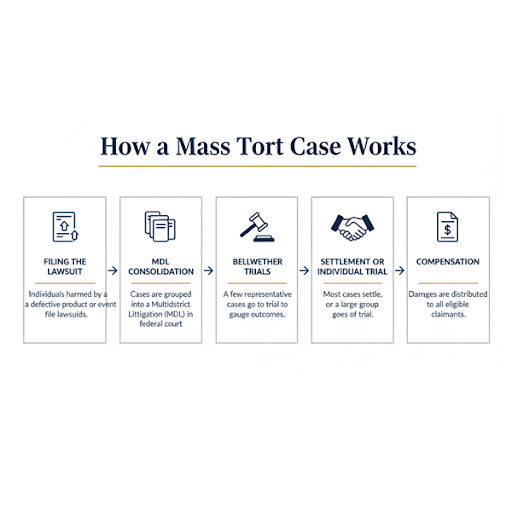
The process isn’t as scary as it sounds, though it does take time. Here’s roughly what happens:

Filing Your Claim

So you start by connecting with a Mass tort attorney and getting your lawsuit filed. They’ll need documentation—all your medical records, hospital bills, documentation of time off work. Basically anything that shows what happened and how it’s affected you. Yeah, there are other people filing similar lawsuits, but yours stands alone based on what you’ve been through.

The Grouping Phase

Courts will consolidate cases into what’s called multidistrict litigation, or MDL. Sounds more complicated than it is. Basically all the pretrial stuff—collecting evidence, interviewing witnesses, bringing in expert testimony—happens collectively. Makes sense when you think about it. Why have 500 different legal teams gather the same evidence 500 different times? But your case itself stays separate.

Bellwether Trials

The court picks some cases to try first. Call them test cases or bellwether trials. These give everyone a sense of how juries respond to the evidence. Maybe the verdicts push the defendant toward offering better settlements. Maybe they show plaintiffs their case isn’t as strong as they thought. Either way, they’re useful data points.

Settlement Negotiations or Going to Trial

Most of these end up settling. Companies would rather avoid the publicity of a drawn-out trial, and frankly, most plaintiffs would rather get compensated sooner than later. But here’s the difference from class actions—your settlement gets negotiated around your specific damages. Not some formula applied to everyone.

If settlement talks break down? Your attorney can still take your case to trial.

Getting Paid

Eventually you get your settlement or verdict. How much depends on what actually happened to you. Worse injuries generally mean more compensation. Minor injuries mean less. Pretty straightforward.

What Kind of Cases Become Mass Torts?

Most mass tort lawsuits fall into a few categories:

Dangerous Drugs

Pharmaceutical companies are supposed to test their products thoroughly and warn people about risks. But sometimes they rush dangerous drugs to market, hide side effects, or downplay dangers. When people get hurt by—heart attacks, strokes, organ damage, whatever—mass tort lawsuits hold them accountable. We’ve seen this with blood thinners, diabetes medications, pain relievers, you name it.

Mass Tort Lawsuit


Mass Tort Lawsuit

Defective Medical Devices 

Hip replacements that break down way too soon. Surgical mesh that causes infections or worse. IUDs that migrate. Hernia mesh that fails. When medical devices don’t work as advertised or actively harm people, mass torts help victims get compensation for the damage.


Toxic Exposure

Chemical spills, contaminated water (we’ve all heard about those stories), workplace exposure to dangerous substances. When corporations cut corners and people or entire communities pay the price health-wise, mass torts provide a path forward.

Mass Tort Lawsuit

Mass Tort Lawsuit

Defective Products

Consumer products that turn out to be dangerous—exploding batteries, contaminated food, dangerous car parts, faulty children’s products. Design flaws, manufacturing defects, inadequate warnings. If it hurt a lot of people, there’s probably a mass tort for it.


Why You Actually Need an Attorney for This 

Look, these cases are complicated. You’re going up against corporations with basically unlimited money and legal teams whose entire job is to minimize what they have to pay out. Trying to handle this yourself is like showing up to a gunfight with a butter knife.

An experienced mass tort attorney brings:

The resources to fight back: Mass tort cases need investigators, expert witnesses, scientific analysis. That stuff is expensive, and individual victims can’t afford it. Law firms handling mass torts have those resources ready to go.

Experience with how these play out: They’ve seen the tactics companies use. They know what evidence you need. They understand how to maximize your compensation because they’ve done it before.

No money upfront: Most work on contingency, meaning they don’t get paid unless you win. That levels the playing field right there.

Attention to YOUR case: Yeah, you’re part of a bigger litigation, but your attorney is focused on your specific injuries and losses. Building the strongest possible individual claim for you.

Negotiating power: When a bunch of injured people are represented by skilled attorneys, it sends a message. Companies tend to take settlements more seriously.

Am I Even Eligible?

Maybe. Key things that matter:

  • You got hurt or sick from something that’s hurt other people too
  • You can prove it (medical records, receipts, documentation)
  • The statute of limitations hasn’t run out (this varies by state—don’t wait around)
  • Your injuries are significant enough that they need individual evaluation

The only way to know for sure is to talk to an attorney who can look at your specific situation. Most offer free consultations, so there’s no risk in finding out.

Bottom Line

Nobody plans on ending up in a mass tort lawsuit. These things happen when we trust that products are safe, medications are tested properly, companies aren’t cutting corners. Then that trust gets broken in a really painful way.

Mass torts give regular people a way to stand up to powerful corporations and actually have a shot at justice. Unlike class actions where everyone gets the same modest payout, mass torts recognize that serious injuries deserve serious compensation.

If you think you’ve been harmed by something that’s hurt a bunch of other people, don’t wait. Statutes of limitations are real. Evidence can disappear. Witnesses forget things. The longer you wait, the harder your case becomes.

Talk to an attorney. Most consultations are free. Figure out if you have a case. Understand your options. You don’t have to do this alone, and you definitely don’t have to accept less than you deserve.

Need Help? Here, Have A Lawyer.

You’ve Been Wronged. We’ll Make It Right.

[Schedule your free case evaluation]

Get in touch for a free consultation. No obligation, no pressure. Let’s talk about what happened and figure out if you have a case worth pursuing.

Disclaimer: This is informational only, not legal advice. Every case is different. Talk to a qualified attorney about your specific situation. Statutes of limitations vary—don’t wait too long to protect your rights.

Rideshare Driver Lawsuit: What Drivers Need to Know About Their Legal Rights & Compensation

Last updated on February 17, 2026

Driving for Uber or Lyft seems straightforward, right? Download the app, turn it on when you want to work, pick up passengers, make money. It’s flexible, accessible, and for millions of people, it’s become a primary or supplemental income source.

But behind that simple app interface lies a complicated legal reality that many drivers don’t fully understand until something goes wrong. And when things do go wrong—whether it’s an accident, a deactivation, unpaid wages, or discriminatory treatment—drivers often discover they have fewer protections than they thought.

Let’s break down what rideshare drivers actually need to know about their legal rights and what

recourse they have when those rights are violated.


Rideshare Driver Lawsuit

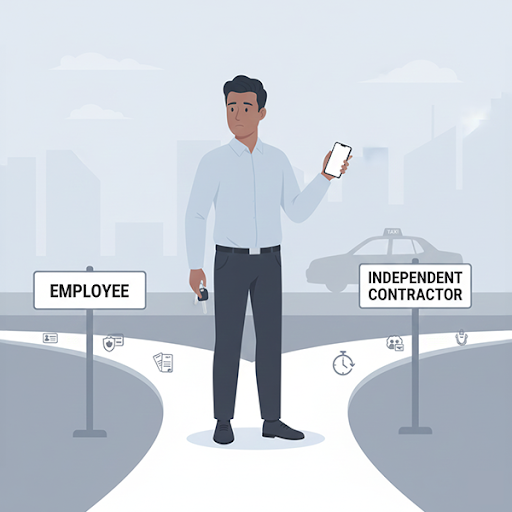
The Classification Problem: Employee vs. Independent Contractor

This is the big one. The foundation of almost every legal issue rideshare drivers face comes down to how they’re classified.

Uber, Lyft, and other rideshare companies classify drivers as independent contractors, not employees. On the surface, this seems fine. You set your own hours, use your own car, decide when and where to work. That’s contractor stuff, right?

But here’s the catch: independent contractors don’t get the same protections and benefits as employees. No minimum wage guarantees. No overtime pay. No workers’ compensation if you’re injured on the job. No unemployment benefits when work dries up. No employer-provided health insurance. No paid sick leave.

Meanwhile, the rideshare companies maintain significant control over drivers. They set the rates, determine which rides you get, establish service standards, monitor your acceptance rates, and can deactivate you at will. That level of control starts to look a lot more like an employer-employee relationship.

This classification issue has sparked lawsuits across the country. Some argue drivers should be classified as employees and entitled to all the benefits that come with it. Others maintain the current independent contractor model is appropriate but that drivers deserve better protections regardless.

In California, this fight led to Proposition 22, a ballot measure that kept drivers as independent contractors but provided some limited benefits. The legal battles continue, and the outcome will shape rideshare driver rights for years to come.


Common Legal Issues Facing Rideshare Drivers

Let’s look at the specific problems that can give rise to legal claims:

Wage and Hour Violations

Even as independent contractors, you’re entitled to fair compensation for your work. But many drivers claim they’re not getting it.

Issues include:

  • Deductions for fees that reduce effective pay below minimum wage
  • Unpaid time waiting for rides or dealing with app issues
  • Discrepancies between what passengers are charged and what drivers receive
  • Hidden fees that aren’t clearly disclosed
  • Changes to payment structures that effectively cut pay

Rideshare Driver Lawsuit

Some of these issues have led to class action lawsuits. Drivers have successfully argued that after expenses like gas, maintenance, insurance, and the company’s cut, they’re making less than minimum wage—which might violate labor laws even for contractors.


Wrongful Deactivation

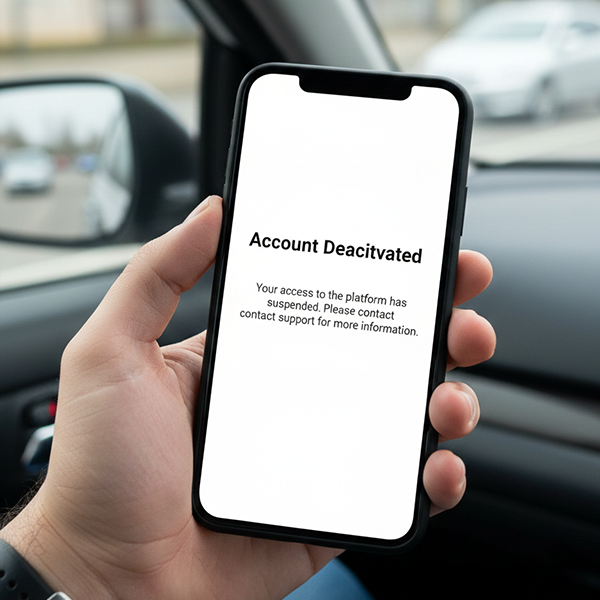
Here’s a nightmare scenario: you log into the app one day and discover you’ve been deactivated. No warning. No explanation. No appeal process. Just… gone. And with it, your income.

Rideshare companies can deactivate drivers for all sorts of reasons—low ratings, too many declined rides, customer complaints, alleged policy violations, or sometimes no clear reason at all. The process is often opaque and automated.

Rideshare Driver Lawsuit

Drivers have sued over wrongful deactivation, arguing:

  • The deactivation was based on false allegations
  • They weren’t given due process or a fair appeal
  • The standards for deactivation are applied inconsistently or discriminatorily
  • Deactivation violated the terms of their agreement with the company

These cases can be tough because the independent contractor agreement usually gives the company broad discretion to deactivate drivers. But there are limits, especially when discrimination or retaliation is involved.


Discrimination and Harassment

Civil rights laws protect independent contractors from discrimination just like employees. If you’re deactivated, denied opportunities, or treated differently because of your race, gender, age, disability, religion, or other protected characteristic, that’s potentially illegal.

Examples might include:

  • Being deactivated based on passenger complaints that contain racial slurs or bias
  • Being denied access to certain ride types or areas based on protected characteristics
  • Experiencing harassment from passengers with no recourse or protection from the company
  • Retaliation for reporting discrimination or safety concerns

These claims can be filed with the EEOC or pursued through civil lawsuits.

Rideshare Driver Lawsuit

Accidents and Injuries

When you’re injured while driving for a rideshare company, things get complicated fast. Who’s responsible? Whose insurance covers what? Can you sue?

The answers depend on what you were doing when the injury occurred:
Offline or en route to your first ride: Generally your personal auto insurance applies. Rideshare companies provide little to no coverage.

Logged in but no ride request accepted: Rideshare companies typically provide limited liability coverage but no comprehensive or collision coverage for your vehicle.

Rideshare Driver Lawsuit

En route to pick up a passenger or during a trip: The rideshare company’s commercial insurance should cover you, typically up to $1 million in liability.

But getting those benefits isn’t always straightforward. Insurance companies might deny claims,dispute coverage, or drag out the process.

If you’re injured by another driver’s negligence, you’d typically sue that driver. But if your injuries occurred because of a dangerous passenger, app malfunction, or the rideshare company’s negligence, you might have a claim against the company itself—though their terms of service usually include forced arbitration clauses.


Expense Reimbursement 

As an independent contractor, you’re responsible for vehicle maintenance, gas, insurance, phone bills, and all other business expenses. But California and some other jurisdictions require that companies reimburse contractors for necessary business expenses if failing to do so would effectively drop their pay below minimum wage.

Some drivers have filed lawsuits arguing that after accounting for unreimbursed expenses, their ef‐fective pay violates wage laws. The success of these claims varies by jurisdiction and specific circumstances.

The Forced Arbitration Problem 

Here’s something buried in that user agreement you clicked through when signing up: you probably agreed to resolve any disputes through arbitration rather than court.

Arbitration is a private process where a neutral arbitrator (rather than a judge or jury) decides your case. Companies prefer it because it’s faster, cheaper, and keeps disputes out of the public eye. But critics argue it favors companies over individual workers and lacks the transparency of public court proceedings.


Forced arbitration clauses also typically include class action waivers, meaning you can’t join with other drivers in a class action lawsuit. You have to pursue your claim individually, which can be prohibitively expensive and time-consuming for smaller claims.

Some courts have struck down forced arbitration agreements in certain contexts, and the law continues to evolve. But as of now, many rideshare drivers are bound by these provisions, limiting their legal options.

Rideshare Driver Lawsuit

Collective Action and Class Lawsuits

Despite arbitration clauses, some drivers have successfully banded together in class action lawsuits or at least tried to.

Rideshare Driver Lawsuit

Notable cases include:

  • Misclassification lawsuits: Drivers arguing they should be classified as employees and seeking back wages, benefits, and expense reimbursement.
  • Tip theft claims: Allegations that companies misled passengers about tips or failed to pass along the full amount.
  • Background check lawsuits: Claims that inaccurate background checks led to wrongful deactivations.

Accessibility lawsuits: Allegations that rideshare companies discriminate against drivers or passengers with disabilities.

Some of these cases have resulted in multi-million-dollar settlements. Others are still working their way through the courts.If you think you have a claim that might affect many drivers, consulting with a mass tort attorney about class action possibilities is worth considering.


Your Rights and How to Protect Them

So what can you actually do as a rideshare driver to protect yourself?

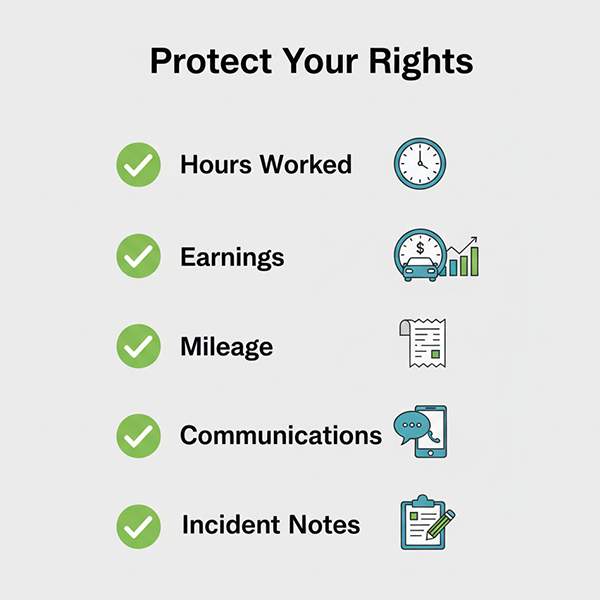
Document everything. Keep records of:

  • Your hours and earnings
  • All trips and mileage
  • Vehicle expenses (maintenance, gas, insurance, depreciation)
  • Communications with the rideshare company
  • Any incidents, complaints, or issues that arise
Rideshare Driver Lawsuit

Good records are essential if you ever need to pursue a legal claim.

Understand your agreement: Yes, the terms of service are long and boring. But you need to know what you agreed to—including arbitration clauses, deactivation policies, and payment terms.

Know your insurance coverage: Make sure you understand what your personal auto insurance covers and what the rideshare company’s insurance covers. Consider rideshare-specific insurance if gaps exist.

Report issues promptly: If you experience discrimination, harassment, safety concerns, or pay discrepancies, report them through proper channels and keep records of your complaints.

Join driver advocacy groups: Organizations like Rideshare Drivers United and others fight for driver rights and can provide resources and support.

Consult with an attorney if needed: If you’ve been wrongfully deactivated, seriously injured, or systematically underpaid, talking to a lawyer who handles rideshare driver cases can help you understand your options.

The Future of Rideshare Driver Rights

The legal landscape for rideshare drivers is evolving rapidly. Legislation at state and federal levels continues to address classification, wages, and protections. Court cases are setting new precedents. And public awareness of driver issues is growing.

Some changes on the horizon might include:

  • Clearer classification standards or a hybrid category between employee and contractor
  • Portable benefits systems that provide protections regardless of classification
  • Stronger due process requirements for deactivations
  • Better transparency around pay, fees, and algorithms
  • Enhanced protections for injured drivers

But change takes time, and in the meantime, drivers need to understand the rights they currently have and how to enforce them.

When to Consider Legal Action

How do you know if your situation warrants talking to a lawyer?

Consider it if:

  • You believe you’ve been wrongfully deactivated, especially due to discrimination or false allegations
  • You’ve been seriously injured while driving and insurance claims are being denied or delayed
  • You believe you’re being systematically underpaid or charged excessive fees
  • You’ve experienced discrimination or harassment with no adequate response from the company
  • You’ve identified a pattern of problems affecting many drivers that might support a class action

Many attorneys offer free consultations, especially for potential class actions or cases with significant damages. There’s no harm in exploring your options.

The Bottom Line

Driving for a rideshare company shouldn’t mean giving up your legal rights. You deserve fair pay, safe working conditions, protection from discrimination, and due process when problems arise.

The independent contractor classification complicates things, and forced arbitration clauses limit options. But drivers aren’t powerless. Legal remedies exist, and successful lawsuits have already resulted in changes to company policies and compensation for drivers.

If you’re experiencing issues that seem unfair or illegal, don’t just accept it as the cost of doing business. Document what’s happening, understand your rights, and consider speaking with a qualified attorney.

The gig economy is still figuring itself out legally. Your voice—and your willingness to stand up for your rights—contributes to how rideshare driver protections evolve going forward.

You’re not just a driver. You’re a worker with rights, and those rights matter.

How a Retainer Agreement Works: Everything You Need to Know

Last updated on February 17, 2026

You’ve decided to hire a lawyer. Good. But before any actual legal work happens, they hand you a doc‐ ument—probably several pages long, filled with legal terminology—and ask you to sign it. That’s your retainer agreement. 

Most people just skim it and sign on the dotted line, trusting that everything’s standard and fair. And maybe it is. But maybe it isn’t. Understanding what’s actually in that retainer agreement can save you from confusion, disputes, and unwelcome surprises down the line. 


Personal Injury lawsuit illustration

What a Retainer Agreement Actually Is


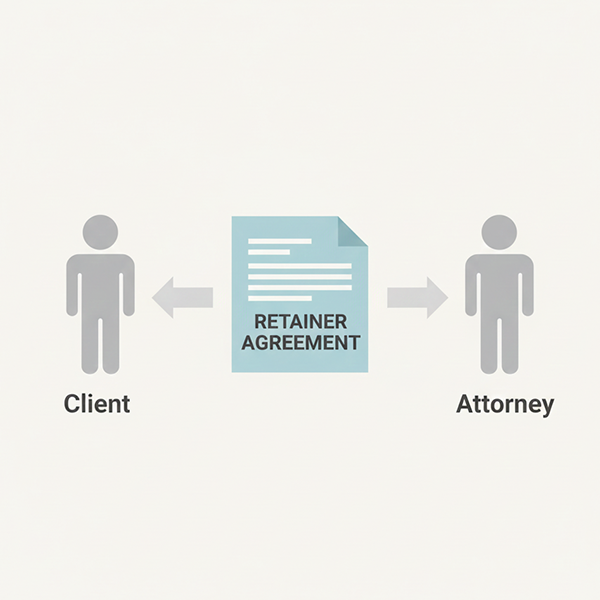
At its core, a retainer agreement is a contract between you (the client) and your attorney that spells out the terms of your working relationship. It’s not optional—nearly every attorney will require one before taking on your case. 

Think of it as the rulebook for your attorney-client relationship. It answers questions like: – What will the lawyer do for you? 

  • How much will it cost? 
  • How will billing work? 
  • What are each party’s responsibilities? 
  • What happens if things don’t work out?


The term “retainer” can be a bit confusing because it means different things in different contexts. Sometimes it refers to the agreement itself. Other times it refers to money you pay upfront. We’ll get into both. 

The important thing to understand is that this document protects both you and your lawyer. It sets clear expectations so everyone knows what they’re getting into.

Types of Fee Arrangements

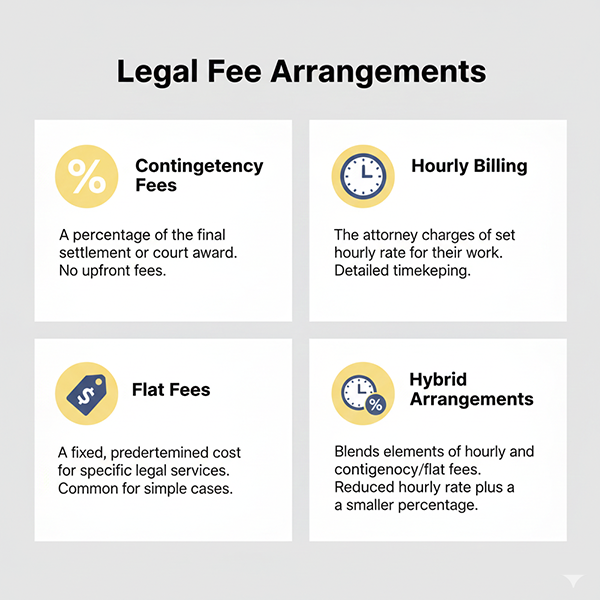
One of the most critical parts of any retainer agreement is the fee structure. How exactly are you going to pay for legal services? There are several common arrangements: 

Contingency Fees

This is the “you only pay if we win” model. The attorney takes a percentage of whatever compensation you receive—typically 30-40% for personal injury cases. Physical injury lawyers often use this fee structure because it makes representation accessible to clients who might not have funds upfront. If you lose or don’t recover anything, you owe nothing for attorney fees (though you might still owe costs, which we’ll get to). 

Contingency arrangements are common in: 

  • Personal injury cases 
  • Mass tort litigation 
  • Medical malpractice 
  • Product liability 
  • Employment discrimination 
  • Some class action lawsuits 

The beauty of contingency fees is that they make legal representation accessible even when you can’t afford thousands of dollars upfront. The downside? A significant chunk of your recovery goes to the at‐ torney. 

Hourly Billing

This is probably what you picture when you think “lawyer fees.” The attorney tracks their time and charges you for every hour (or fraction thereof) they spend on your case. Rates vary wildly depending on the attorney’s experience, location, and practice area—anywhere from $150 to $1,000+ per hour. 

Hourly billing is typical for: 

  • Business law 
  • Estate planning 
  • Family law (divorce, custody) 
  • Real estate transactions 
  • Criminal defense 
  • General litigation 

With hourly billing, you typically pay a retainer upfront—an advance payment that the attorney draws from as they work. When it runs low, they ask for more.


Flat Fees

Some attorneys charge a set amount for specific services. You pay one price regardless of how much time the attorney spends. This provides predictability.

Flat fees are common for:

  • Simple wills or trusts
  • Uncontested divorces
  • Trademark applications
  • Traffic tickets
  • Basic contract drafting
  • Simple real estate closings

The key with flat fees is understanding exactly what’s included. Does it cover court appearances? Revisions? Unexpected complications? Make sure it’s spelled out.

Personal Injury lawsuit illustration

Hybrid Arrangements

Sometimes attorneys combine approaches. For example, a reduced hourly rate plus a smaller contingency percentage. Or a flat fee for certain tasks with hourly billing for anything beyond the scope. 

What Should Be in Your Retainer Agreement?

Not all retainer agreements are created equal, but certain elements should always be included: 

Scope of Representation

This section defines what the attorney is agreeing to do for you. It should be specific. “Represent you in a personal injury claim arising from the car accident on October 15, 2024” is good. “General legal services” is way too vague. 

The scope also often includes what the attorney is NOT doing. If they’re handling your car accident case but not your pending divorce, that should be clear. 

Fee Structure and Payment Terms

This is the money section. Exactly how much you’ll pay, how it’s calculated, and when payment is due. If it’s contingency-based, what’s the percentage? Does it increase if the case goes to trial? If it’s hourly, what’s the rate? How often will you be billed? 

Any upfront costs—retainers, filing fees, expert witness deposits—should be specified here. 

Costs and Expenses

Here’s something that trips people up: attorney fees and case costs are different things. Even in contingency cases where you don’t pay hourly fees, you’re often responsible for costs. 

Costs include: 

  • Court filing fees 
  • Expert witness fees 
  • Deposition costs 
  • Copying and document production 
  • Investigation expenses 
  • Travel costs 
  • Medical record retrieval fees 

Some retainer agreements say the attorney will advance these costs and deduct them from your settlement or award. Others require you to pay costs as they arise. Know which applies to you. 

Communication and Updates

How often will the attorney update you on your case? How quickly will they respond to your calls or emails? What’s the preferred method of communication? 

Good retainer agreements set reasonable expectations here. You might not get daily updates, but you should know how and when you’ll hear from your lawyer.

retainer-agreement

Termination Provisions

What happens if you want to fire your lawyer? What if they want to withdraw from your case? The retainer agreement should explain the process and any financial implications. 

In contingency cases, there’s often a provision about what happens if you switch attorneys mid-case. The original attorney might be entitled to a portion of the fee even if someone else finishes the case.

Dispute Resolution

If you and your attorney end up in conflict—over fees, strategy, or anything else—how will it be resolved? Some agreements require mediation or arbitration instead of allowing lawsuits. 


Reading the Fine Print

Now comes the part where I tell you to actually read the retainer agreement before signing. I know, I know—it’s long and boring and you’re anxious to get your case started. But trust me on this. 

Pay particular attention to: 

The percentage in contingency cases – Is it 33%? 40%? Does it change if the case goes to trial or appeal? That difference of a few percentage points can mean thousands of dollars. 

Who pays costs – Are costs deducted from your recovery before or after the attorney’s fee is calcu‐ lated? This matters. If you recover $100,000 and there are $10,000 in costs: 

– If costs come out first: Attorney gets 33% of $90,000 = $29,700 

– If attorney fee comes out first: Attorney gets 33% of $100,000 = $33,000, then costs are deducted. That’s a $3,300 difference. 

Lien provisions – The attorney might claim a lien on your case, meaning they have a legal right to be paid from any recovery. This can get complicated if you want to switch lawyers. 

Responsibility for a losing case – If you lose at trial, could you owe the other side’s attorney fees? This is rare in personal injury cases but possible in other areas. 

Scope limitations – Make sure you understand exactly what is and isn’t included. Appeals? Post judgment collection? Related claims? 

Personal Injury lawsuit illustration

Questions to Ask Before Signing

Don’t be afraid to ask for clarification. Any attorney worth hiring will be happy to explain their retainer agreement. Here are good questions: 

  • Can you walk me through the fee structure in plain English? 
  • What costs am I responsible for, and approximately how much should I expect? 
  • How often will you communicate with me about my case? 
  • Have you handled cases like mine before? What were the outcomes? 
  • If I’m unhappy with your services, what’s the process for ending our relationship?
  • Are there any circumstances where I might owe money even if I lose my case? 
  • If I get a settlement offer, do I make the final decision on whether to accept? 

If the attorney gets defensive or refuses to explain something, that’s a red flag. 

What If You Don’t Understand Something?

Ask. Seriously. It’s your right to understand what you’re signing, and it’s the personal lawsuit attorney’s responsibility to explain it in terms you can grasp. 

If you’re still uncomfortable after the attorney explains something, you have options: – Ask for modifications to the agreement 

– Get a second opinion from another attorney 

– Take the agreement home to review before signing 

– Walk away and find a different lawyer 

A retainer agreement is negotiable to some extent. If something doesn’t work for you, speak up. The attorney might be willing to adjust terms, especially on a good case.

Red Flags to Watch For

Certain things in a retainer agreement should make you pause: 

Vague language about fees – If you can’t figure out exactly how much you’ll pay, that’s a problem. 

Excessive costs being passed to you – Some attorneys inflate costs or charge you for routine of‐ fice expenses like basic copying or local phone calls. That’s not cool. 

No termination provision – You should always have the right to fire your attorney, though you may owe for work already done. 

Automatic deductions from your settlement – Make sure you’ll get a full accounting of all fees and costs before money is deducted from your recovery. 

Requiring you to make decisions very quickly – Any attorney pressuring you to sign immediately without time to read and consider is suspect. 

Personal Injury lawsuit illustration


After You Sign

Once the retainer agreement is signed, keep a copy for your records. You’ll want to refer back to it if questions come up about billing, scope, or anything else. 

The agreement doesn’t mean you can’t communicate with your attorney or ask questions as things progress. It’s just the framework for your relationship. 

If circumstances change—your case becomes more complex, you need additional services, whatever— the attorney might ask you to sign an amended retainer agreement or an addendum. Same rules apply: read it, understand it, ask questions. 

When Things Go Wrong

What if you signed a retainer agreement and now you regret it? Or you think your attorney is violating the terms? 

First, talk to them directly. Many disputes arise from misunderstandings that can be cleared up with a conversation. 

If that doesn’t resolve things, you have options: 

– File a complaint with your state bar association 

– Request fee arbitration (many states offer this) 

– Consult with another attorney about your options 

– Fire your current attorney and hire a new one (though fees might still be owed) 

Most attorneys are ethical and follow their retainer agreements. But if yours isn’t, don’t just accept it. You have rights. 

The Bottom Line

A retainer agreement isn’t something to fear—it’s a tool that protects both you and your attorney by making expectations clear from the start. 

But it’s also a legally binding contract, which means you need to take it seriously. Read it. Understand it. Ask questions. Make sure you’re comfortable with the terms before you sign. 

Hiring a lawyer is a big decision, and the retainer agreement is a crucial part of that relationship. Take the time to get it right, and you’ll save yourself potential headaches down the road. 

And remember: a good attorney wants you to understand the agreement. They want you to feel confident and informed. If you’re getting pressure to just sign without reading or pushback when you ask questions, maybe that’s not the right lawyer for you. 

Your legal case is important. The agreement that governs how it’s handled should be too.