
How Personal Injury Lawsuits Work: A Complete Guide

Last updated on February 17, 2026

Let’s say you slip and fall in a grocery store because someone didn’t put up a wet floor sign. Or you’re rear-ended at a red light by a distracted driver. Maybe a defective product injures you, or a doctor’s mistake makes your condition worse instead of better. 

These situations all have something in common: someone else’s negligence or wrongdoing caused you harm. And when that happens, personal injury law gives you a path to seek compensation. 

But how does it actually work? What’s the process like? What can you realistically expect? Let’s break it down without all the legal mumbo-jumbo. 

What “Personal Injury” Actually Means 

Personal injury law covers situations where you suffer emotional, psychological or physical injury because of another party’s actions (or inactions). The legal term is “tort law,” but let’s stick with “personal injury” because that’s what normal people call it.

The key concept here is negligence. To have a personal injury case, you generally need to show that: – The other party owed you a duty of care 

– They breached that duty 

– Their breach caused your injury 

– You suffered actual damages as a result 

That sounds complicated, but it’s usually pretty straightforward in practice. Drivers owe other drivers a duty to follow traffic laws and drive safely. Property owners owe visitors a duty to maintain reason‐ ably safe premises. Manufacturers owe consumers a duty to make products that won’t harm them when used properly. 

When these duties get violated and someone gets hurt? That’s when personal injury claims happen.


Personal Injury lawsuit illustration

Common Types of Personal Injury Cases 

Personal injury is a broad category. Let’s look at the most common types: 

Car Accidents – Far and away the most frequent personal injury claims. Someone runs a red light, follows too closely, drives drunk, or texts behind the wheel, and boom—you’re injured and your car is totaled.

Slip and Fall – These “premises liability” cases happen when hazardous conditions on someone’s property cause you to fall and get hurt. Wet floors, broken stairs, icy sidewalks, poor lighting— anything that makes a property dangerous. 

Medical Malpractice – When healthcare providers screw up and patients suffer as a result. Misdia‐ gnosis, surgical errors, medication mistakes, birth injuries—these cases are complex and require expert testimony. 

Product Liability – Defective or dangerous products that injure consumers. This could be anything from a faulty appliance that causes a fire to a contaminated food product that makes you sick.

Dog Bites – In many states, dog owners are strictly liable if their dog bites someone. Even “he’s never done that before” doesn’t cut it as a defense. 

Workplace Accidents – Though most workplace injuries are handled through workers’ compensation, some cases—especially those involving third parties—can become personal injury lawsuits. 

Assault and Battery – Yes, even intentional acts fall under personal injury law. The criminal case and civil case are separate things. 

Each type has its own nuances, but the basic legal process is similar across the board.


Step One: The Incident and Immediate Aftermath 

Your personal injury case begins the moment you get hurt. What you do in those first hours and days matters more than you might think. 

Get medical attention immediately. Don’t wait. Don’t “tough it out.” Don’t assume you’re fine. Injuries that seem minor can be serious, and insurance companies will absolutely use any delay in treatment against you later. 

Personal Injury lawsuit illustration

Document everything you can. Take photos of the scene, your injuries, the conditions that caused your accident. Get contact information from witnesses. If it’s a car accident, get the other driver’s insurance info and call the police. 

Report the incident. If you were hurt on someone’s property, make sure there’s a formal incident report. In car accidents, get a police report. At work, file an accident report with your employer. 

Keep records of everything. Medical bills, prescriptions, time off work, any expenses related to your injury—save it all. These documents become crucial evidence later.


Personal Injury Lawsuits

Step Two: Contacting a Personal Injury Attorney 

Here’s a question people always ask: do you really need a lawyer for a personal injury case? 

For minor injuries with clear fault and cooperative insurance companies? Maybe not. If you scraped your knee, missed one day of work, and the other side’s offering a fair settlement to cover your small medical bill—sure, handle it yourself. 

But for anything more serious? You want an attorney. Here’s why:

Insurance companies have teams of lawyers working to minimize what they pay out. You’re at a massive disadvantage without your own legal representation. 

Personal injury attorneys know what your case is actually worth. You might think that $5,000 offer sounds good, but an experienced lawyer knows you should be getting $50,000. 

The legal process is complicated. Statutes of limitations, filing requirements, discovery rules, negotiation tactics—this isn’t stuff you want to figure out on the fly while you’re still recovering from injuries. 

Most personal injury lawyers work on contingency, which means they only get paid if you win. No up‐ front costs, no hourly fees. They take a percentage (typically 30-40%) of whatever you recover. That aligns their interests with yours—they want to maximize your compensation.


Step Three: Investigation and Case Building

Once you’ve hired an attorney, they get to work building your case. This involves: 

Gathering evidence – Medical records, accident reports, photos, witness statements, expert opin‐ ions. Everything that proves what happened and how badly you were hurt. 

Establishing liability – Proving that the other party was at fault. This might involve accident recon‐ struction, reviewing video footage, interviewing witnesses, or consulting experts. 

Calculating damages – Figuring out how much your case is worth. This includes both economic dam‐ ages (medical bills, lost wages, property damage) and non-economic damages (pain and suffering, emotional distress, loss of enjoyment of life). 

Dealing with insurance companies – Your attorney handles all communication with insurance ad‐ justers. This is actually a huge relief because those adjusters are trained to get you to say things that hurt your case.

Step Four: Demand and Negotiation 

Once your attorney has built your case, they’ll typically send a demand letter to the other side. This document outlines: 

  • What happened 
  • Why the other party is liable 
  • The extent of your injuries and damages 
  • How much compensation you’re seeking
Personal Injury Lawsuits

The demand letter starts the negotiation process. The other side will almost always respond with a counteroffer that’s lower than your demand. Then the back-and-forth begins. 

Negotiation is actually where most personal injury cases resolve. Something like 95% of cases settle without ever going to trial. That might surprise you, but trials are expensive, time-consuming, and risky for both sides. Settlement offers certainty. 

Your attorney will keep you informed throughout negotiations and advise you on whether offers are fair. But ultimately, you decide whether to accept a settlement or push forward to trial.


Personal Injury Lawsuits

Step Five: Filing a Lawsuit (If Necessary) 

If settlement negotiations stall or the other side is being unreasonable, your attorney might file a form‐ al lawsuit. This doesn’t mean you’re definitely going to trial—many cases still settle even after a lawsuit is filed. But it shows you’re serious and willing to take things all the way. 

Once the lawsuit is filed, the case enters the “litigation” phase. This involves:

Pleadings – The formal exchange of legal documents outlining each side’s position. 

Discovery – Both sides request and exchange evidence. This includes written questions (interrogator‐ ies), document requests, and depositions where witnesses testify under oath. 

Motions – Either side can file motions asking the court to make certain rulings. A common one is a “motion for summary judgment” where the defendant asks the court to dismiss the case without trial. 

Mediation – Many courts require mediation before trial. A neutral third party helps both sides try to reach a settlement. 

This phase can take months or even years. It’s frustrating, but thorough preparation is essential for a strong case.


Step Six: Trial 

If the case still doesn’t settle, you go to trial. Here’s the basic flow: 

Jury selection – If it’s a jury trial, both sides help select jurors through a process called voir dire. 

Opening statements – Each side previews their case for the jury. 

Presentation of evidence – Your attorney presents evidence proving the defendant’s liability and your damages. This includes witness testimony, expert opinions, documents, photos, and more. The defense presents their case too, trying to minimize their liability or argue you’re partially at fault. 

Personal Injury Lawsuits

Cross-examination – Each side gets to question the other side’s witnesses. 

Closing arguments – Both sides make final arguments summarizing the evidence and asking the jury to rule in their favor. 

Jury deliberation – The jury discusses the case privately and reaches a verdict. 

Verdict – The jury announces their decision. If they find for you, they’ll also determine how much compensation you receive. 

Trials are stressful, but remember: your attorney has been preparing for this the whole time. They know what they’re doing.


Step Seven: Collecting Your Compensation 

Whether you settle or win at trial, the final step is actually getting paid. If it’s a settlement, the defendant (or their insurance company) sends payment according to the settlement terms. 

Your attorney takes their contingency fee percentage and deducts any case expenses (filing fees, expert witness fees, etc.). The rest goes to you. 

If you won at trial, the defendant might appeal, which can delay payment. But eventually, they’ll have to pay what the court ordered. 

Personal Injury Lawsuits

How Long Does All This Take? 

The frustrating answer: it varies. A straightforward case with clear liability and minor injuries might settle in a few months. A complex case with disputed fault and serious injuries could take years. 

Factors that affect timeline: 

  • How long it takes you to reach maximum medical improvement 
  • Whether liability is clear or disputed 
  • How cooperative (or difficult) the other side is 
  • Court schedules and backlogs 
  • Whether the case settles or goes to trial.

Your attorney can give you a more specific timeline based on your particular case. 


What Your Case Is Worth 

Another “it depends” situation, but here’s what factors into your compensation: 

  • Medical expenses (past and future) 
  • Lost wages and earning capacity 
  • Property damage 
  • Pain and suffering 
  • Emotional distress 
  • Loss of enjoyment of life 
  • Permanent disability or disfigurement 

The more severe and lasting your injuries, the higher the value. Cases involving permanent disability or significant scarring tend to result in larger awards.

Don’t Make These Mistakes 

Finally, some common errors that can tank your personal injury case: 

Waiting too long to see a doctor or hire an attorney. Both time-sensitive. 

Posting on social media about your accident or injuries. Anything you post can be used against you. Accepting an early settlement offer without consulting a lawyer. It’s almost always too low. Exaggerating your injuries. Credibility is everything. Be honest. 

Missing medical appointments or not following treatment plans. The defense will argue you’re not really that injured.

Personal Injury Lawsuits

Your Path Forward 

Personal injury lawsuits exist to make injured people whole again. You shouldn’t have to suffer financially because someone else was careless or reckless. 

The process might seem intimidating, but thousands of people navigate it successfully every year. With the right attorney and realistic expectations, you can pursue the compensation you deserve. 

If you’ve been injured due to someone else’s negligence, don’t wait. Consult with a personal injury attorney and learn about your options. Most initial consultations are free, and you’ve got nothing to lose by exploring your rights. 

You’ve already dealt with the injury. Now let the legal system work the way it’s supposed to—by holding the responsible party accountable and providing you with fair compensation.

What Is a Motor Vehicle Accident Lawsuit? A Step-by-Step Guide

Last updated on February 17, 2026

Car accidents happen in a split second. You’re driving along, then BAM—everything goes sideways and you’re trying to piece together what just happened. Then the real nightmare starts. Injuries, your car’s wrecked, insurance people calling nonstop, medical bills showing up in the mail. And if some other driver caused it? Now you’re paying for their mistake.
That’s where motor vehicle accident lawsuits come in. They’re basically how you force the person who caused the crash (or really, their insurance company) to cover what they broke.
Whether it’s a rear-ender that threw your back out or a serious T-bone that landed you in the hospital, the process is similar. Someone else caused it, they need to pay for it.
Let me walk you through how this actually works, step by step. It’s less scary when you know what’s coming.
Whether it’s a rear-ender that threw your back out or a serious T-bone that landed you in the hospital, the process is similar. Someone else caused it, they need to pay for it.
Let me walk you through how this actually works, step by step. It’s less scary when you know what’s coming.

Motor Vehicle Accident Lawsuit

Understanding Motor Vehicle Accident Lawsuits

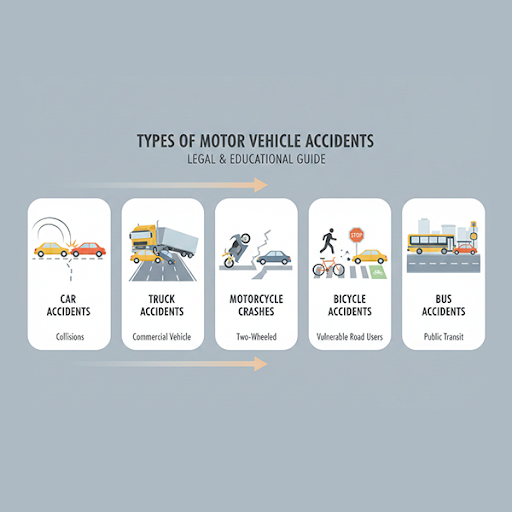
Motor vehicle accidents aren’t just about cars hitting each other. Could be:

  • Regular car crashes (yeah, the most common type)
  • Truck accidents with those massive commercial vehicles
  • Motorcycle crashes
  • Someone getting hit while crossing the street
  • Bicycle accidents
  • Sometimes bus accidents

Any situation where a vehicle hurts someone, basically. The legal stuff is pretty similar across all these, though trucks sometimes have extra regulations and motorcycle accidents tend to involve worse injuries.

Most people think “lawsuit” means courtroom and judge and jury. Actually? Most settle before you ever see a courtroom. You file the lawsuit to put pressure on the insurance company and get some deadlines going, but negotiations keep happening the whole time.


Step-by-Step: How a Motor Vehicle Accident Lawsuit Works

Step 1: Get Medical Treatment Immediately

After any accident, go see a doctor. Even if you feel okay right now. Adrenaline’s wild—it’ll mask all sorts of pain and injury. That concussion or internal bleeding? Might not feel it for hours, maybe days.

Plus insurance companies love using delays against you. “Oh, he waited four days to see a doctor? Couldn’t have been that hurt then.” Don’t give them that ammunition.

Take photos of your injuries as they show up. Keep every single medical bill, every prescription receipt, every piece of paperwork. You’ll need it all.

Step 2: Document the Accident Scene

If you can physically do it at the scene:

  • Photograph the vehicles from every angle you can manage
  • Get pictures of the scene—skid marks, traffic lights, road conditions, everything
  • Swap information with the other driver
  • Grab contact info from anyone who saw it happen
  • Get a copy of the police report

This stuff becomes the foundation of your case. More evidence you have, better off you are.

Step 3: Contact Accident Injury Attorneys

This is where most people freeze up. You’re thinking you should call a lawyer, but lawyers are expensive, right? And maybe your case isn’t a big enough deal?

Here’s what people don’t realize—that first conversation? Free. You call, explain what happened, they ask some questions, tell you if you’ve got a case and what it might be worth. Doesn’t cost you anything, no strings attached.

They take your case? Almost always on contingency. They get paid when you get paid. Usually about 33%, sometimes more if it goes to trial. But nothing out of your pocket upfront.

So really, there’s no reason not to at least talk to one and see what they say.

Step 4: Investigation and Case Building

Once you hire someone, they start digging:

  • Getting police reports and photos from the scene
  • Collecting all your medical records
  • Talking to witnesses
  • Maybe bringing in experts to reconstruct how the accident happened
  • Adding up all your damages—current bills and future costs

This takes a while. Your lawyer can’t put a number on your case until they know the full extent of what happened to you. Rush into a settlement and you might find out later you needed way more money than you got.

They’re also figuring out who was really at fault and how much. Sometimes it’s clear cut. Other times everybody’s pointing fingers at each other, which changes how the whole thing plays out.

Motor Vehicle Accident Lawsuit

Yeah, it’s less than the total number sounds like at first. That’s just how these work.


Step 5: Filing an Insurance Claim

Before actually suing anyone, your lawyer usually files a claim with the other driver’s insurance company. Gets the ball rolling on negotiations.

Their insurance adjuster looks everything over, does their own investigation, makes you an offer. That first offer? Always low. Sometimes insulting. That’s just how they operate.

Your attorney comes back with a number that actually makes sense based on what you lost. Then it’s back and forth. Sometimes you work it out here. A lot of times you don’t, because the insurance company’s betting you’ll get tired and take whatever they’re offering.

Step 6: Filing the Actual Lawsuit

When insurance stops being cooperative or straight-up denies your claim, your attorney files the lawsuit. That’s when it gets officially legal.

The other driver and their insurance get served with your complaint. They’ve got about 30 days to respond, admit or deny what you’re claiming.

Filing doesn’t mean negotiating’s over though. Most cases still settle after filing. But now there’s court dates and deadlines hanging over everything, which tends to make both sides take things more seriously.

Motor Vehicle Accident Lawsuit

Step 7: Discovery Phase

This part drags. Both sides exchange information through what they call discovery:

Interrogatories – Basically written questions you answer under oath

Document requests – Both sides asking for relevant paperwork

Depositions – Getting questioned in person under oath. You’ll probably get deposed, the other driver will, maybe witnesses and experts too

Expert witnesses – Doctors review your medical stuff, accident experts figure out exactly how the crash happened

Can take months. Sometimes more than a year. It’s tedious but necessary—both sides building their arguments while trying to poke holes in what the other side’s saying.

Step 8: Mediation and Settlement Negotiations

While discovery’s happening and after, people are still trying to settle. Lot of courts make you try mediation before trial—that’s where some neutral person tries getting both sides to agree.

Mediation’s not binding unless everybody agrees to settle. Works pretty often though, because it forces everyone into a room to negotiate for real. The mediator can also call out when somebody’s being unrealistic.

If you’ve got solid evidence and serious injuries, insurance companies usually start being more reasonable around this point. Trials cost them money and juries are unpredictable.

Step 9: Trial (If Settlement Fails)

Can’t agree on a settlement? Goes to trial. Jury (or sometimes just a judge) hears both sides lay out their evidence.

Your lawyer presents:

  • Proof the other driver screwed up
  • All your medical records and bills
  • You testifying, witnesses testifying
  • Experts giving their professional opinions

Defense does their thing, trying to make it seem like it wasn’t their fault or your injuries aren’t that bad.

Jury goes off, talks it over, comes back with a verdict. If they side with you, they decide how much you get.

Trials are stressful. Take forever. Juries can surprise you in good ways or bad. But sometimes it’s the only way to actually get what you deserve.

Step 10: Receiving Your Settlement or Verdict

You finally settle or win at trial. Now you get paid, right?

Sort of. Here’s how the money actually moves:

  1. Check goes to your lawyer first
  2. They take out their cut (that 33% or whatever you agreed on)
  3. Any medical liens get paid (doctors who treated you waiting for their money, your health insurance if they paid stuff)
  4. Court costs and expert fees come out
  5. You get what’s left

Motor Vehicle Accident Lawsuit

Yeah, it’s less than the total number sounds like at first. That’s just how these work.


What Can You Actually Recover?

Motor vehicle accident lawsuits can get you money for:

Medical Expenses – Hospital bills, surgeries, physical therapy, prescriptions, medical equipment. Both what you’ve already spent and what you’ll need going forward.

Lost Wages – Money you didn’t make because you couldn’t work while recovering. Pretty straightforward if you’ve got pay stubs.

Lost Earning Capacity – If your injuries mean you can’t go back to your old job or can’t earn as much anymore, that counts. Usually need an expert to testify about this.

Property Damage – What it costs to fix or replace your car and anything else that got damaged.

Pain and Suffering – The actual pain, emotional trauma, how your life got worse. This one’s subjective and varies a lot case to case.

Punitive Damages – In really bad cases (like drunk driving), courts might throw in extra money to punish the person who hurt you. Doesn’t happen often.

Common Defenses Insurance Companies Use

Insurance companies aren’t just going to write you a check. They’ll argue:

Comparative negligence – Saying you were partly at fault too, which cuts down what you get. Some states won’t let you recover anything if you’re more than 50% responsible.

Pre-existing injuries – Claiming you were already hurt before the accident or you’re exaggerating how bad it is. They dig through your medical history looking for anything they can use.

Lack of causation – Saying the accident didn’t actually cause your injuries, or you got hurt some other way.

Failure to mitigate – Claiming you made things worse by not following your doctor’s orders or refusing treatment they recommended.

Good accident injury attorneys know all these tricks and how to fight back. That’s a big part of why you need one.

Motor Vehicle Accident Lawsuit

How Long Does This Take?

Wish I could give you a straight answer here. Simple cases might wrap up in 3-6 months. Complicated ones with serious injuries and arguments about who’s at fault? Could drag on 2-3 years, maybe longer.

What affects timing:

  • How long you’re in treatment for your injuries
  • Whether people are arguing about fault
  • How difficult the insurance company wants to be
  • Court schedules (courts are backed up everywhere)
  • How complicated your damages are to calculate

You really can’t settle until you’ve hit maximum medical improvement—that’s when you’ve healed as much as you’re going to heal. Settle too early, and you might find out later you need more treatment you can’t afford.

Do You Really Need an Attorney?

Could you file a lawsuit yourself? Yeah, technically. Should you? Probably not.

Insurance companies have whole departments full of lawyers and adjusters whose entire job is paying out as little as possible. They’re counting on you not knowing the law. They’ll use that.

Accident injury attorneys even things out:

  • They know what cases are worth
  • They’ve seen all the insurance company tricks
  • They handle the legal maze while you heal
  • Contingency fee means no upfront cost
  • Data shows people with lawyers get more money even after the fee comes out

Trying to save that contingency fee usually backfires. You end up settling for less than a lawyer would’ve gotten you, even after taking out their percentage.

What If the Statute of Limitations Is Running Out?

Every state puts a time limit on filing motor vehicle accident lawsuits. Miss that deadline and your case is done—doesn’t matter how strong it was.

Time limits vary. Could be one year, could be six. Most states land somewhere between two and four years. Some have shorter deadlines if you’re suing a government entity.

Don’t wait around. Evidence vanishes. Witnesses forget what they saw. Insurance companies stop caring about negotiating.

Think you might have a case? Talk to a lawyer sooner rather than later.

Motor Vehicle Accident Lawsuit

Conclusion

Getting hurt in a crash that wasn’t your fault is bad enough. Then you’ve got to fight for money while you’re trying to heal? That part’s worse. But insurance companies care more about their bottom line than your medical bills, so here we are.

Motor vehicle accident lawsuits are how you hold negligent drivers accountable and actually get compensated for what you lost. Takes time, involves a bunch of legal complexity, but it’s often the only way to get what you actually need instead of what insurance wants to pay.

Been injured in a crash? Talk to accident injury attorneys who do this regularly. Figure out what your case is worth. Learn your options. Most will talk to you for free, so you’re not risking anything by asking.

Don’t let insurance companies push you into accepting less than you need. Don’t let deadlines slip by. Take control and fight for what’s fair.

Need Help? Here, Have A Lawyer.

You’ve Been Wronged. We’ll Make It Right.

[Schedule your free case evaluation]

Call us for a free consultation. We’ll go over what happened, explain what you can do, help you figure out what your case might actually be worth. No obligation, no pressure—just straight talk about your situation.

Disclaimer: This article provides general information only and does not constitute legal advice. Motor vehicle accident cases vary significantly based on specific facts and circumstances. Consult with a qualified attorney about your individual situation. Statutes of limitations vary by state and case type—don’t delay protecting your rights.

How to File an LDS Lawsuit: Rights, Process & What Survivors Should Know

Last updated on February 17, 2026

When you’ve been hurt by an institution you trusted—especially one that was supposed to protect you —the betrayal cuts deeper than words can capture. It’s not just about what happened to you. It’s about who failed to stop it. Who looked the other way. 

For survivors of sexual abuse within the Mormon Church—officially known as The Church of Jesus Christ of Latter-day Saints, or LDS for short—that pain gets tangled up with years of silence, institutional cover-ups, and a system that’s often seemed more interested in protecting its reputation than protecting kids. The LDS Church, which has millions of members worldwide and is headquartered in Salt Lake City, Utah, has faced mounting allegations that church leaders knew about abuse happening in their congregations but didn’t do enough to stop it. In some cases, they allegedly did the opposite— actively concealing it. 

If you’re thinking about taking legal action, here’s something you need to know right now: you’re not alone. Not even close! Hundreds of survivors have stepped forward in recent years, filing lawsuits and demanding accountability. And yeah, the process isn’t easy—nobody’s gonna sugarcoat that. But it’s your right to seek justice, and there are people ready to help you do it.


Understanding LDS Lawsuits and What They’re About

So what exactly are we talking about when we say “LDS lawsuit”? Most of these cases involve claims of sexual abuse that happened within the church community—abuse committed by bishops, church leaders, members, or others who held positions of trust. But here’s the thing that makes these cases particularly significant: they’re not just about individual abusers. They’re about the institution itself! 


LDS Lawsuit 

Many lawsuits allege that the LDS Church knew about abuse, failed to report it to authorities, and act‐ ively concealed it to protect the organization’s reputation. Think about that for a second. Survivors claim that church leaders used internal mechanisms—like the controversial “help line” operated by the church’s law firm—to route abuse allegations away from law enforcement and toward legal protection for the institution. Instead of calling the police, they called lawyers. 

The allegations paint a troubling picture: an lds sexual abuse lawsuit often involves not just the person who committed the abuse, but the entire system that enabled it, covered it up, and allowed it to continue. It’s about accountability at every level.


Why Survivors Are Coming Forward Now 

You might be wondering: why are so many lawsuits being filed now, sometimes decades after the abuse happened? It’s a fair question, and there are a few really important reasons. 

First off, trauma doesn’t work on a timeline. It just doesn’t! Many survivors weren’t ready to come for‐ ward earlier—they were dealing with shame, fear, psychological barriers, or just trying to get through each day. It takes time—sometimes years, sometimes decades—to process what happened and find the strength to speak out. And that’s okay. There’s no “right” timeline for healing. 

Second, the legal landscape’s changed dramatically. Many states have passed what’re called “look‐ back window” laws that temporarily lift or extend statutes of limitations for childhood sexual abuse 

claims. California, for example, opened a window that allowed survivors to file lawsuits even if the old deadline had passed years ago. These legal reforms recognize something crucial: survivors often can’t come forward immediately, and they deserve a real chance at justice. 

Third, there’s genuine strength in numbers. As more survivors have spoken out, others have felt em‐ powered to do the same. Seeing that you’re not alone—that your experience was part of a larger pat‐ tern, not some isolated incident—can be incredibly validating and motivating. It changes everything!

LDS Lawsuit 

Your Legal Rights as a Survivor

Let’s get crystal clear about what rights you have, because understanding this stuff is genuinely em‐ powering. 

You’ve got the right to file a civil lawsuit seeking compensation for the harm you suffered. This is separate from any criminal case—you can pursue a civil claim regardless of whether criminal charges were filed or whether the abuser was convicted. They’re two different tracks. 

You’ve got the right to hold not just the abuser accountable, but also the institution that failed to protect you. If church leaders knew about the abuse, failed to report it, or enabled it to continue, the LDS Church itself can be named as a defendant. That’s huge!

You’ve got the right to confidentiality and privacy during the legal process. Many survivors file lawsuits anonymously using pseudonyms like “Jane Doe” or “John Doe.” Court records can be sealed, and pro‐ tective measures can be put in place to guard your identity. You don’t have to expose yourself publicly if you don’t want to. 

You’ve got the right to legal representation. Many attorneys who handle lds lawsuit cases work on con‐ tingency, meaning you don’t pay unless they win your case. This removes the financial barrier to seeking justice—you’re not gonna be stuck with a huge legal bill if things don’t work out. 

Most importantly, you’ve got the right to be heard. Your story matters. Your pain matters. And the leg‐ al system provides a formal avenue for making sure they’re acknowledged. Nobody can take that away from you.


The Statute of Limitations: Time Limits and Lookback Windows 

Statutes of limitations are laws that set deadlines for filing lawsuits. Historically, these deadlines were pretty restrictive for abuse survivors—you might’ve only had a few years after turning 18 to file a claim. Which, let’s be honest, is ridiculous when you consider how trauma actually works. 

But that’s been changing, and it’s really important to understand the current landscape. 

Many states have extended or eliminated statutes of limitations for childhood sexual abuse cases. Some have created temporary “lookback windows” that allow survivors to file claims even if the old deadline has passed. California, New York, Washington, and Oregon are among the states that’ve implemented these reforms. It’s been a game-changer! 

For example, California’s lookback window allowed survivors to file lawsuits for abuse that occurred decades ago, leading to nearly 100 lawsuits against the LDS Church in that state alone. These cases were consolidated into a Judicial Council Coordination Proceeding in Los Angeles, and the church has agreed in principle to settle over 100 of them. That’s not a small number. Not even close. 

The specifics vary by state, so it’s crucial to consult with an attorney who can tell you what applies to your situation. Even if you think too much time’s passed, the law might’ve changed in your favor! Don’t assume you’re out of time—check first. You might be surprised. 

The Process of Filing an LDS Lawsuit 

So what actually happens if you decide to move forward? Let’s walk through it step by step.

Initial Consultation

You’ll meet with an attorney who specializes in sexual abuse cases, particularly those involving religious institutions. This conversation’s confidential—what you say stays between you and them. You’ll share your story, answer questions about what happened, when, where, and who was involved, and the attorney will assess whether you’ve got a viable case. 

This can be emotionally difficult, no question about it. You’re revisiting trauma, and that’s hard! A good attorney will be sensitive to that and work at a pace that feels manageable for you. If you need to take breaks, take breaks. If you need to come back another day, that’s okay too.

LDS Lawsuit 

LDS Lawsuit 

Investigation and Evidence Gathering

If you decide to proceed, your attorney will start building your case. This might involve: – Obtaining records from the church (which they’re often not eager to hand over) – Identifying other survivors with similar experiences—pattern evidence is powerful – Gathering any documentation you have: journals, medical records, therapy notes, emails, anything that corroborates your account 

  • Finding witnesses who can support aspects of your story 
  • Consulting with experts in trauma, psychology, or institutional policies 

Look, don’t worry if you don’t have a ton of documentation. Your testimony matters! Experienced attorneys know how to build strong cases even when physical evidence is limited.


Filing the Complaint

Your attorney files a formal legal complaint that names the defendants—this could be the abuser, the LDS Church, specific church leaders, or all of the above. The complaint outlines your claims and the legal basis for holding the defendants accountable. It’s basically the official “here’s what happened and here’s why you’re responsible” document. 

This document gets served to the defendants, officially notifying them that you’re suing. That’s when things become real!

LDS Lawsuit 

Discovery Phase 

Both sides exchange information and evidence. Your attorney might depose witnesses, request intern‐ al church documents (including records of those “help line” calls or disciplinary proceedings), and build the strongest case possible. The defense will do their own investigation, though their goal’s to minimize liability—let’s not pretend otherwise. 

Be prepared: this phase can involve difficult questions and reliving painful memories! But your attor‐ ney’s there to support you and object to anything improper or overly invasive. They’re your advocate. 

LDS Lawsuit 

Settlement Negotiations 

Many lds sexual abuse lawsuit cases settle before going to trial. The church might make an offer to re‐ solve the case without admitting guilt. Settlements can provide closure and compensation without the stress of a trial, but they typically include confidentiality agreements—meaning you can’t talk publicly about the settlement terms. 

The LDS Church has been resolving many claims through a private settlement process, often offering above-market settlements in exchange for confidentiality. This allows the church to avoid public scrutiny while providing financial compensation to survivors. It’s a trade-off, and only you can decide if it’s worth it.

Whether to settle is entirely your decision! Your attorney will advise you, but ultimately, you get to choose what feels right. Don’t let anyone pressure you either way. 


Trial (If Necessary) 

If the case doesn’t settle, it goes to trial. You’ll testify about your experiences, and other evidence will 

be presented. The jury (or judge) will decide whether the defendants are liable and what damages you should receive. It’s your day in court, literally. 

Trials are public (though some protective measures might be in place), and they can be emotionally taxing—there’s no way around that. But they also offer the opportunity for your story to be told fully and for a formal judgment in your favor. Some survivors find that incredibly powerful. 

LDS Lawsuit 

What Compensation Looks Like 

If you win your case or reach a settlement, what can you actually recover? Let’s break it down.

Economic damages cover tangible financial losses: 

– Medical expenses, including long-term therapy and mental health treatment (which can add up fast) – Lost wages or earning capacity if the abuse affected your education or career – Other documented financial costs related to the abuse 

LDS Lawsuit 


Non-economic damages address intangible harms: 

  • Pain and suffering 
  • Emotional distress 
  • Loss of enjoyment of life 
  • Psychological trauma 

These are harder to quantify, but they’re just as real. Just as important.

Punitive damages might be awarded in cases involving particularly egregious conduct, such as when the church knew about the abuse and covered it up. These are meant to punish the defendant and de‐ ter similar behavior in the future. They’re basically the legal system saying, “This was so bad that we’re gonna make an example out of you.” 

Settlement amounts vary widely. Some survivors have received mid-five-figure settlements, while oth‐ ers have received millions. A California jury awarded $2.28 billion to a woman abused by her LDS step‐ father (the church settled its portion for $1 million). A West Virginia case involving a church member who abused numerous children resulted in a $32 million settlement. The range is huge. Every case is different. 

Your attorney can give you a more realistic sense of what to expect based on similar cases and the specifics of your situation. Don’t be afraid to ask!


Challenges You Might Face 

I’m not gonna pretend this process is easy, because it’s not. Here are some challenges survivors often encounter: 

Emotional difficulty. Reliving trauma is hard—really hard. You might experience anxiety, depression, or PTSD symptoms flaring up. Having a support system in place—therapist, support group, trusted friends or family—is crucial. Don’t try to go through this alone. You shouldn’t have to. 

Denial and victim-blaming. Some defendants and their lawyers will try to discredit you, question your memory, or suggest you’re lying. It’s awful and unfair, but it happens! Your attorney will fight back against these tactics, and you need to be prepared for it mentally. 

Institutional resistance. The LDS Church has significant resources and aggressive legal teams. They might drag things out or fight tooth and nail to avoid liability. It can feel like David versus Goliath, and honestly, sometimes it is. But remember: survivors have won significant verdicts and settlements. It’s possible. You’re not powerless. Remember that.

Clergy-penitent privilege. The church often invokes this privilege to keep abuse reports confidential —basically arguing that what’s said to a bishop is like what’s said to a priest in confession. However, recent court rulings have challenged this defense, particularly when internal records show the church’s knowledge of abuse or when mandatory reporting laws are at stake. An Arizona appeals court, for in‐ stance, ruled that a jury should determine if a bishop was legally obligated to report a confession of child sexual abuse. The legal landscape’s shifting. Finally. 

Privacy concerns. While there are protections in place, some aspects of your case might become public. Consider how much exposure you’re comfortable with and discuss this with your attorney upfront. It’s better to know what you’re getting into.

LDS Lawsuit 

You’re Not Alone in This 

Here’s something really important to remember: hundreds of survivors have filed lawsuits against the LDS Church! You’re part of a larger movement demanding accountability and change. You’re not some isolated case. You’re part of something bigger. 

Many attorneys offer free consultations for abuse cases and work on contingency, meaning you don’t pay unless they win. If your case involves multiple victims with similar experiences, consulting with a class action lawyer can help determine if a collective approach might be appropriate. This removes the financial barrier to seeking legal help—you’re not gonna be stuck with a massive bill just for trying. 

Support organizations exist to help survivors navigate the legal process and connect with resources. You don’t have to do this alone. Seriously. You don’t. 

LDS Lawsuit 


Making the Decision 

Only you can decide whether filing an lds lawsuit is right for you. There’s no “should” here—it’s entirely personal. Nobody else gets to make this call. 

Some survivors find the legal process empowering and healing. Others find it too stressful or triggering. Both responses are valid. Both are okay. There’s no wrong answer here. 

What matters is that you have options. You have rights. And if you choose to exercise them, resources and support are available. You’re not trapped. You’ve got choices. 

The abuse wasn’t your fault. The church’s failure to protect you wasn’t your fault. And seeking justice? That’s your right. Full stop. No debate. 


Taking the First Step 

If you’re considering an LDS lawsuit or any institutional abuse claim, start by talking to a qualified at‐ torney who’s got experience with these cases. You’re not committing to anything—you’re just gathering information and understanding your options. Think of it as a fact-finding mission! 

You’ve already survived the hardest part. Now you get to decide what justice looks like for you. What closure means. What accountability means. 

Whatever you choose, know that your experience matters, your voice matters, and you deserve to be heard. You always did.

The Step-by-Step Process of a Mass Tort Lawsuit: What to Expect

Last updated on February 17, 2026

Mass tort lawsuits sound intimidating, don’t they? The very phrase conjures up images of packed courtrooms, mountains of paperwork, and legal proceedings that drag on forever. And honestly? Some of that is accurate. But it’s not as mysterious or impossible to navigate as you might think. 

If you’re considering joining a mass tort lawsuit—or you’ve already started the process and want to understand what comes next—let me walk you through it. Real talk, no legal jargon overload. 

Starting at the Beginning: What Even Is a Mass Tort?

Before we dive into the process, let’s make sure we’re on the same page about what we’re dealing with. 

A mass tort lawsuit happens when many people suffer similar injuries from the same product, drug, or action. Think defective medical devices, dangerous pharmaceuticals, toxic exposure, or faulty consumer products. The key word here is “similar”—everyone’s claiming they were harmed in comparable ways by the same thing.

Mass torts aren’t quite the same as class actions, though people often confuse the two. In a class action, everyone’s treated as one big group with identical claims. In a mass tort, each person maintains their individual lawsuit, but all the cases are handled together for efficiency. 

Why does that distinction matter? Because in a mass tort, your specific injuries and circumstances still count. You’re not just a number in a crowd—your case is your case.


Mass Tort Lawsuit

Step One: Realizing Something’s Wrong

Every mass tort starts with someone noticing a pattern. Maybe you took medication and developed serious side effects. You mention it to your doctor, do some searching online, and discover hundreds of other people reporting the exact same problems. 

Or maybe you see a news story about a product recall or a lawsuit filing, and you realize you’ve been affected by that very product. Suddenly the health issues you’ve been having make sense.


This initial awareness is crucial. You can’t pursue justice for harm you don’t know was caused by someone else’s negligence. So if something feels off—if a medical device failed, if a drug caused unexpected problems, if a product injured you—start connecting the dots.


Step Two: Consulting with a Mass Tort Attorney

Once you suspect you might have a claim, it’s time to talk to a lawyer who specializes in mass tort cases. And yes, specialization matters here. These cases are complex, resource-intensive, and require specific expertise. 

During your initial consultation (which is usually free), the attorney will assess your situation. They’ll ask questions about: 

  • What product, drug, or exposure you’re dealing with 
  • When and how you were exposed or used the product 
  • What injuries or damages you’ve suffered 
  • What medical treatment you’ve received 
  • Whether you have documentation (medical records, receipts, etc.)

Mass Tort Lawsuit

They’re trying to determine if you have a viable case and if your claim fits into an existing mass tort litigation or if something new needs to be initiated. 

If the attorney thinks you have a case, they’ll explain how the process works, what you can expect, and what their fee structure looks like. Most mass tort lawyers work on contingency—they only get paid if you win or settle.


Mass Tort Lawsuit

Step Three: Filing Your Individual Complaint

If you decide to move forward, your attorney will file a complaint on your behalf. This is the formal legal document that initiates your lawsuit. It outlines: 

  • Who you’re suing (the defendants) 
  • What they did wrong (the legal claims) 
  • How you were harmed (your injuries and damages) 
  • What you want (compensation) 

Even though your case might be part of a larger mass tort, this complaint is specifically yours. It’s tailored to your circumstances, your injuries, your losses. 

In many established mass tort cases, your lawsuit will be consolidated with others in what’s called multidistrict litigation (MDL) or coordinated proceedings. Basically, all similar cases get grouped together and handled by the same court to streamline the process.


Step Four: The Investigation and Discovery Phase

This is where things get detailed—and honestly, a bit tedious. Discovery is the process where both sides gather evidence and information. 

Your attorney will collect everything relevant to your case: 

  • – Complete medical records 
  • – Employment records (if your injuries affected your ability to work) 
  • – Receipts and documentation of expenses 
  • – Expert opinions from medical professionals 
  • – Your deposition testimony
Mass Tort Lawsuit

Mass Tort Lawsuit

Step Five: Negotiation and Settlement Discussions

Here’s the thing about mass tort lawsuits: most of them settle before going to trial. Not all, but most. 

Once both sides have gathered evidence and evaluated the strength of the claims, settlement negotiations usually begin. The defendant (or their insurance company) might make an offer to resolve cases without going through lengthy trials. 

In mass tort situations, defendants often create settlement programs where they offer compensation to claimants who meet certain criteria. Your attorney will evaluate any settlement offers and advise you on whether they’re fair.

You’re never obligated to accept a settlement. It’s your decision. But there are pros and cons to con‐ sider: 

Settling means you get compensation sooner, avoid the uncertainty and stress of trial, and lock in a guaranteed outcome. The downside? You might receive less than a jury would award, and you give up your right to pursue further claims related to that injury. 

Going to trial means you could potentially win more, but you also risk losing entirely. Trials are expensive, time-consuming, and unpredictable. 

Your attorney will give you their honest assessment, but ultimately, it’s your call.


Step Six: Going to Trial (If Necessary)

If settlement negotiations fail or you choose not to settle, your case heads to trial. 

In a mass tort trial, even though many people have similar claims, each plaintiff’s case is presented individually. The jury hears evidence about your specific injuries, your damages, your story. 

Both sides present their arguments. Your attorney will demonstrate that the defendant’s product or ac‐ tion caused your injuries and that you deserve compensation. The defense will try to show that they’re not liable or that your injuries aren’t as severe as claimed.

Mass Tort Lawsuit

Trials involve witness testimony, expert opinions, cross-examinations, and legal arguments. They can last days or weeks depending on complexity. 

Then the jury deliberates and reaches a verdict. They’ll decide whether the defendant is liable and, if so, how much compensation you should receive.


Mass Tort Lawsuit

Step Seven: Verdict or Settlement Payment

If you win at trial, the court issues a judgment in your favor. If you settled, the terms of the settlement determine what you receive. 

But here’s an important point: even after a verdict or settlement agreement, actually getting paid can take time. There might be appeals, administrative processing, or disbursement procedures that need to happen first. 

Your attorney will handle most of this, making sure the defendant follows through on payment and that you receive what you’re owed.

Once the money comes through, your attorney takes their agreed-upon percentage (typically 30-40% in contingency cases), any litigation costs are deducted, and the rest goes to you.


Step Eight: Moving Forward

After everything’s resolved, you’ll hopefully have the financial resources to cover your medical expenses, lost wages, and other damages. More importantly, you’ve held the responsible party account‐ able. 

Mass tort lawsuits serve a purpose beyond individual compensation. They force companies to acknowledge dangerous products, change their practices, and sometimes remove harmful items from the market. Your participation might literally save someone else from going through what you experienced. 

Your attorney will give you their honest assessment, but ultimately, it’s your call.


What to Expect Along the Way

Let’s be realistic about what this journey looks like: 

It takes time. Mass tort cases rarely resolve quickly. We’re talking months to years in many instances. Patience is essential. 

There’s a lot of paperwork. Medical records, financial documents, questionnaires, forms—you’ll sign and provide a lot of information. 


Mass Tort Lawsuit

Communication is key. Stay in touch with your attorney. Respond to requests for information promptly. Keep them updated on any changes in your medical condition.

Don’t expect to get rich. Compensation is meant to make you whole, not provide a windfall. It should cover your actual losses and damages. 

The emotional toll is real. Revisiting your injuries and experiences can be difficult. Don’t hesitate to seek support if you need it.


Is It Worth It?

That’s the question everyone asks, right? Is going through this whole process worth the time, effort, and stress? 

Only you can answer that. But consider this: if a company harmed you through negligence or miscon‐ duct, doing nothing means they face no consequences. They keep selling the same dangerous product. More people get hurt. The cycle continues. 

Filing a mass tort lawsuit says, “No. This isn’t acceptable. You need to be held accountable.” It’s about justice as much as compensation.

Plus, you’re not alone in this. Your attorney handles the heavy lifting. You’re part of a larger group of people fighting for the same thing. There’s strength in numbers, and mass tort litigation capitalizes on that. 

Taking the First Step

If you think you might have a mass tort claim, the first step is simple: talk to a qualified attorney. Get a consultation. Learn about your options. There’s no obligation, and knowledge is power. 

The process might seem daunting, but people navigate it successfully every day. With the right legal representation and realistic expectations, you can pursue the justice and compensation you deserve. 

Don’t let fear of the process stop you from exploring your rights. You’ve already been through enough —make sure it counts for something.