

How a Retainer Agreement Works: Everything You Need to Know

You’ve decided to hire a lawyer. Good. But before any actual legal work happens, they hand you a doc‐ ument—probably several pages long, filled with legal terminology—and ask you to sign it. That’s your retainer agreement.
Most people just skim it and sign on the dotted line, trusting that everything’s standard and fair. And maybe it is. But maybe it isn’t. Understanding what’s actually in that retainer agreement can save you from confusion, disputes, and unwelcome surprises down the line.
What a Retainer Agreement Actually Is
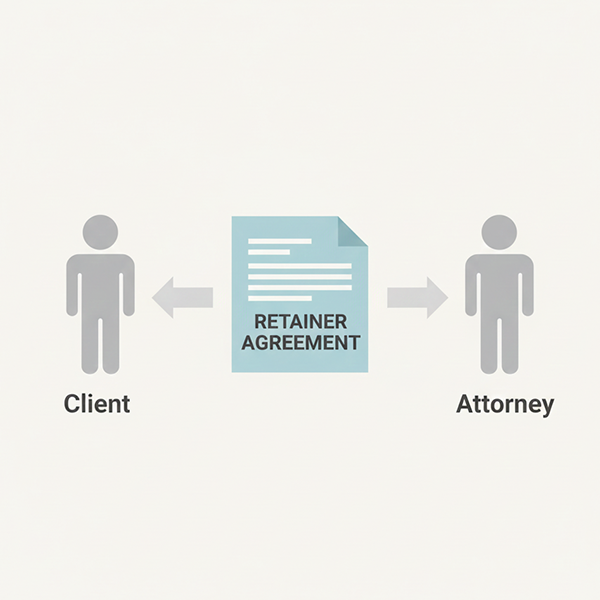
At its core, a retainer agreement is a contract between you (the client) and your attorney that spells out the terms of your working relationship. It’s not optional—nearly every attorney will require one before taking on your case.
Think of it as the rulebook for your attorney-client relationship. It answers questions like: – What will the lawyer do for you?
- How much will it cost?
- How will billing work?
- What are each party’s responsibilities?
- What happens if things don’t work out?
The term “retainer” can be a bit confusing because it means different things in different contexts. Sometimes it refers to the agreement itself. Other times it refers to money you pay upfront. We’ll get into both.
The important thing to understand is that this document protects both you and your lawyer. It sets clear expectations so everyone knows what they’re getting into.
Types of Fee Arrangements
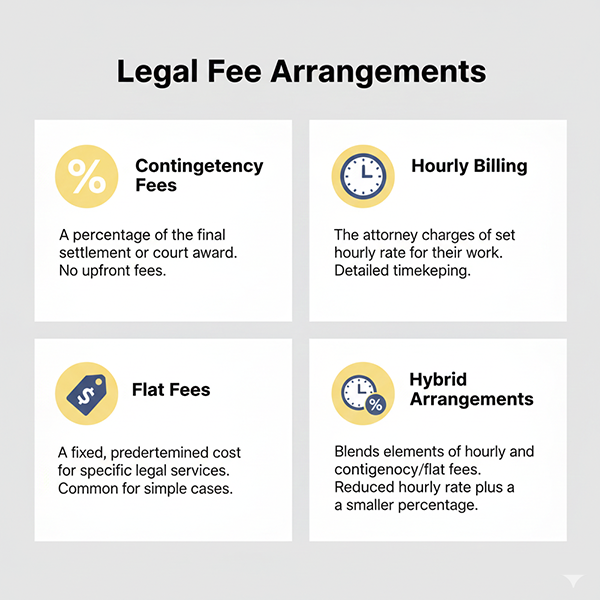
One of the most critical parts of any retainer agreement is the fee structure. How exactly are you going to pay for legal services? There are several common arrangements:
Contingency Fees
This is the “you only pay if we win” model. The attorney takes a percentage of whatever compensation you receive—typically 30-40% for personal injury cases. Physical injury lawyers often use this fee structure because it makes representation accessible to clients who might not have funds upfront. If you lose or don’t recover anything, you owe nothing for attorney fees (though you might still owe costs, which we’ll get to).
Contingency arrangements are common in:
- Personal injury cases
- Mass tort litigation
- Medical malpractice
- Product liability
- Employment discrimination
- Some class action lawsuits
The beauty of contingency fees is that they make legal representation accessible even when you can’t afford thousands of dollars upfront. The downside? A significant chunk of your recovery goes to the at‐ torney.
Hourly Billing
This is probably what you picture when you think “lawyer fees.” The attorney tracks their time and charges you for every hour (or fraction thereof) they spend on your case. Rates vary wildly depending on the attorney’s experience, location, and practice area—anywhere from $150 to $1,000+ per hour.
Hourly billing is typical for:
- Business law
- Estate planning
- Family law (divorce, custody)
- Real estate transactions
- Criminal defense
- General litigation
With hourly billing, you typically pay a retainer upfront—an advance payment that the attorney draws from as they work. When it runs low, they ask for more.
Flat Fees
Some attorneys charge a set amount for specific services. You pay one price regardless of how much time the attorney spends. This provides predictability.
Flat fees are common for:
- Simple wills or trusts
- Uncontested divorces
- Trademark applications
- Traffic tickets
- Basic contract drafting
- Simple real estate closings
The key with flat fees is understanding exactly what’s included. Does it cover court appearances? Revisions? Unexpected complications? Make sure it’s spelled out.
Hybrid Arrangements
Sometimes attorneys combine approaches. For example, a reduced hourly rate plus a smaller contingency percentage. Or a flat fee for certain tasks with hourly billing for anything beyond the scope.
What Should Be in Your Retainer Agreement?
Not all retainer agreements are created equal, but certain elements should always be included:
Scope of Representation
This section defines what the attorney is agreeing to do for you. It should be specific. “Represent you in a personal injury claim arising from the car accident on October 15, 2024” is good. “General legal services” is way too vague.
The scope also often includes what the attorney is NOT doing. If they’re handling your car accident case but not your pending divorce, that should be clear.
Fee Structure and Payment Terms
This is the money section. Exactly how much you’ll pay, how it’s calculated, and when payment is due. If it’s contingency-based, what’s the percentage? Does it increase if the case goes to trial? If it’s hourly, what’s the rate? How often will you be billed?
Any upfront costs—retainers, filing fees, expert witness deposits—should be specified here.
Costs and Expenses
Here’s something that trips people up: attorney fees and case costs are different things. Even in contingency cases where you don’t pay hourly fees, you’re often responsible for costs.
Costs include:
- Court filing fees
- Expert witness fees
- Deposition costs
- Copying and document production
- Investigation expenses
- Travel costs
- Medical record retrieval fees
Some retainer agreements say the attorney will advance these costs and deduct them from your settlement or award. Others require you to pay costs as they arise. Know which applies to you.
Communication and Updates
How often will the attorney update you on your case? How quickly will they respond to your calls or emails? What’s the preferred method of communication?
Good retainer agreements set reasonable expectations here. You might not get daily updates, but you should know how and when you’ll hear from your lawyer.

Termination Provisions
What happens if you want to fire your lawyer? What if they want to withdraw from your case? The retainer agreement should explain the process and any financial implications.
In contingency cases, there’s often a provision about what happens if you switch attorneys mid-case. The original attorney might be entitled to a portion of the fee even if someone else finishes the case.
Dispute Resolution
If you and your attorney end up in conflict—over fees, strategy, or anything else—how will it be resolved? Some agreements require mediation or arbitration instead of allowing lawsuits.
Reading the Fine Print
Now comes the part where I tell you to actually read the retainer agreement before signing. I know, I know—it’s long and boring and you’re anxious to get your case started. But trust me on this.
Pay particular attention to:
The percentage in contingency cases – Is it 33%? 40%? Does it change if the case goes to trial or appeal? That difference of a few percentage points can mean thousands of dollars.
Who pays costs – Are costs deducted from your recovery before or after the attorney’s fee is calcu‐ lated? This matters. If you recover $100,000 and there are $10,000 in costs:
– If costs come out first: Attorney gets 33% of $90,000 = $29,700
– If attorney fee comes out first: Attorney gets 33% of $100,000 = $33,000, then costs are deducted. That’s a $3,300 difference.
Lien provisions – The attorney might claim a lien on your case, meaning they have a legal right to be paid from any recovery. This can get complicated if you want to switch lawyers.
Responsibility for a losing case – If you lose at trial, could you owe the other side’s attorney fees? This is rare in personal injury cases but possible in other areas.
Scope limitations – Make sure you understand exactly what is and isn’t included. Appeals? Post judgment collection? Related claims?

Questions to Ask Before Signing
Don’t be afraid to ask for clarification. Any attorney worth hiring will be happy to explain their retainer agreement. Here are good questions:
- Can you walk me through the fee structure in plain English?
- What costs am I responsible for, and approximately how much should I expect?
- How often will you communicate with me about my case?
- Have you handled cases like mine before? What were the outcomes?
- If I’m unhappy with your services, what’s the process for ending our relationship?
- Are there any circumstances where I might owe money even if I lose my case?
- If I get a settlement offer, do I make the final decision on whether to accept?
If the attorney gets defensive or refuses to explain something, that’s a red flag.
What If You Don’t Understand Something?
Ask. Seriously. It’s your right to understand what you’re signing, and it’s the personal lawsuit attorney’s responsibility to explain it in terms you can grasp.
If you’re still uncomfortable after the attorney explains something, you have options: – Ask for modifications to the agreement
– Get a second opinion from another attorney
– Take the agreement home to review before signing
– Walk away and find a different lawyer
A retainer agreement is negotiable to some extent. If something doesn’t work for you, speak up. The attorney might be willing to adjust terms, especially on a good case.
Red Flags to Watch For
Certain things in a retainer agreement should make you pause:
Vague language about fees – If you can’t figure out exactly how much you’ll pay, that’s a problem.
Excessive costs being passed to you – Some attorneys inflate costs or charge you for routine of‐ fice expenses like basic copying or local phone calls. That’s not cool.
No termination provision – You should always have the right to fire your attorney, though you may owe for work already done.
Automatic deductions from your settlement – Make sure you’ll get a full accounting of all fees and costs before money is deducted from your recovery.
Requiring you to make decisions very quickly – Any attorney pressuring you to sign immediately without time to read and consider is suspect.

After You Sign
Once the retainer agreement is signed, keep a copy for your records. You’ll want to refer back to it if questions come up about billing, scope, or anything else.
The agreement doesn’t mean you can’t communicate with your attorney or ask questions as things progress. It’s just the framework for your relationship.
If circumstances change—your case becomes more complex, you need additional services, whatever— the attorney might ask you to sign an amended retainer agreement or an addendum. Same rules apply: read it, understand it, ask questions.
When Things Go Wrong
What if you signed a retainer agreement and now you regret it? Or you think your attorney is violating the terms?
First, talk to them directly. Many disputes arise from misunderstandings that can be cleared up with a conversation.
If that doesn’t resolve things, you have options:
– File a complaint with your state bar association
– Request fee arbitration (many states offer this)
– Consult with another attorney about your options
– Fire your current attorney and hire a new one (though fees might still be owed)
Most attorneys are ethical and follow their retainer agreements. But if yours isn’t, don’t just accept it. You have rights.
The Bottom Line
A retainer agreement isn’t something to fear—it’s a tool that protects both you and your attorney by making expectations clear from the start.
But it’s also a legally binding contract, which means you need to take it seriously. Read it. Understand it. Ask questions. Make sure you’re comfortable with the terms before you sign.
Hiring a lawyer is a big decision, and the retainer agreement is a crucial part of that relationship. Take the time to get it right, and you’ll save yourself potential headaches down the road.
And remember: a good attorney wants you to understand the agreement. They want you to feel confident and informed. If you’re getting pressure to just sign without reading or pushback when you ask questions, maybe that’s not the right lawyer for you.
Your legal case is important. The agreement that governs how it’s handled should be too.

Get In Touch
Need help? Here, Have A Lawyer.
Connect with usNeed help? Here, Have A Lawyer.
You’ve Been Wronged. We’ll Help Make It Right.
Download your free how-to guide for Havealawyer.com